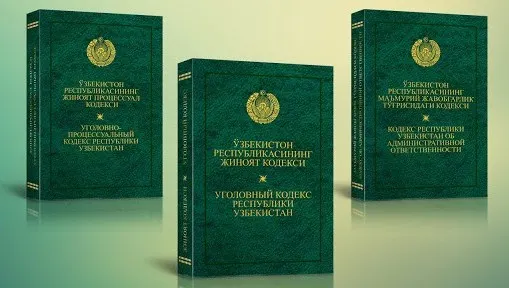
In Uzbekistan, the scope of individuals possessing the right to inviolability and immunity, as well as the procedure for conducting proceedings against them, has been clarified.
The new law also establishes criminal liability for violating the rights to inviolability and immunity. Under a law signed by the President of Uzbekistan on October 14, a specific procedure for conducting proceedings against individuals enjoying inviolability and immunity has been established.
Individuals with the right to inviolability
The following are considered individuals with the right to inviolability: deputies of the Legislative Chamber and members of the Senate of the Oliy Majlis; the Authorized Person for Human Rights (Ombudsman); the Child Rights Commissioner; judges; prosecutors, investigators, and inquirers; advocates; members of the Central Election Commission; candidates for the Presidency (during their candidate status), and others.
Meanwhile, managerial staff of the Presidential Administration, for a period of five years after dismissal, shall enjoy inviolability for actions or inactions not related to the performance of duties assigned to them within the Presidential Administration.
Individuals with immunity
The President of the Republic of Uzbekistan, officials of the Presidential Administration, and their family members are considered individuals with immunity.
Furthermore, managerial staff of the Presidential Administration have immunity regarding decisions made, actions committed, or inactions performed in connection with the execution of duties assigned to them within the Presidential Administration. Members of Parliament possess immunity for voting and expressing opinions.
Detention
It is prohibited to detain a person enjoying inviolability and bring them to a law enforcement agency, except for cases of detention for up to three hours based on the grounds provided for in paragraph 1 of Article 221 of the CPC (when a person is caught in the act of committing a crime or immediately thereafter).
Criminal liability
Bringing individuals with inviolability to criminal liability requires the consent of the relevant chamber, the President, or another authorized body. For example, for deputies — on the basis of a submission by the relevant chamber; for managerial staff of the Presidential Administration — on the basis of a submission by the Prosecutor General with the written consent of the President.
Evidence
Evidence obtained in violation of the requirements of inviolability and immunity shall be deemed inadmissible and excluded from the case materials.
Administrative liability
Bringing individuals with inviolability to administrative liability in judicial proceedings is carried out exclusively in accordance with the procedure established in the new Chapter XXIII³ of the Code of Administrative Liability. Administrative penalties cannot be applied in judicial proceedings against individuals possessing immunity.
Interception of telephone conversations
The interception of telephone conversations and monitoring of correspondence concerning individuals with inviolability is carried out solely by a court decision or with the written permission of the Prosecutor General.
Criminal liability for violating the rights to inviolability and immunity
Knowingly and unlawfully detaining, forcibly bringing, or carrying out investigative actions against a person who possesses inviolability in accordance with the Constitution or law, as well as giving orders or instructions for such actions:
– is punishable by restriction of freedom for a term of 3 to 5 years with deprivation of certain rights, or by imprisonment for the same term.
If the same acts are committed repeatedly, by a group of persons in prior conspiracy, with the use of violence or the threat of its use, by falsifying evidence, or through imprisonment or bringing to criminal liability — they are punishable by imprisonment for a term of 5 to 8 years.
Compensation for damages
Damages caused as a result of decisions, actions, or inactions of officials and managerial staff of the Presidential Administration associated with the performance of their assigned duties shall be compensated from the State Budget, and the right of recourse shall not be applied against them.