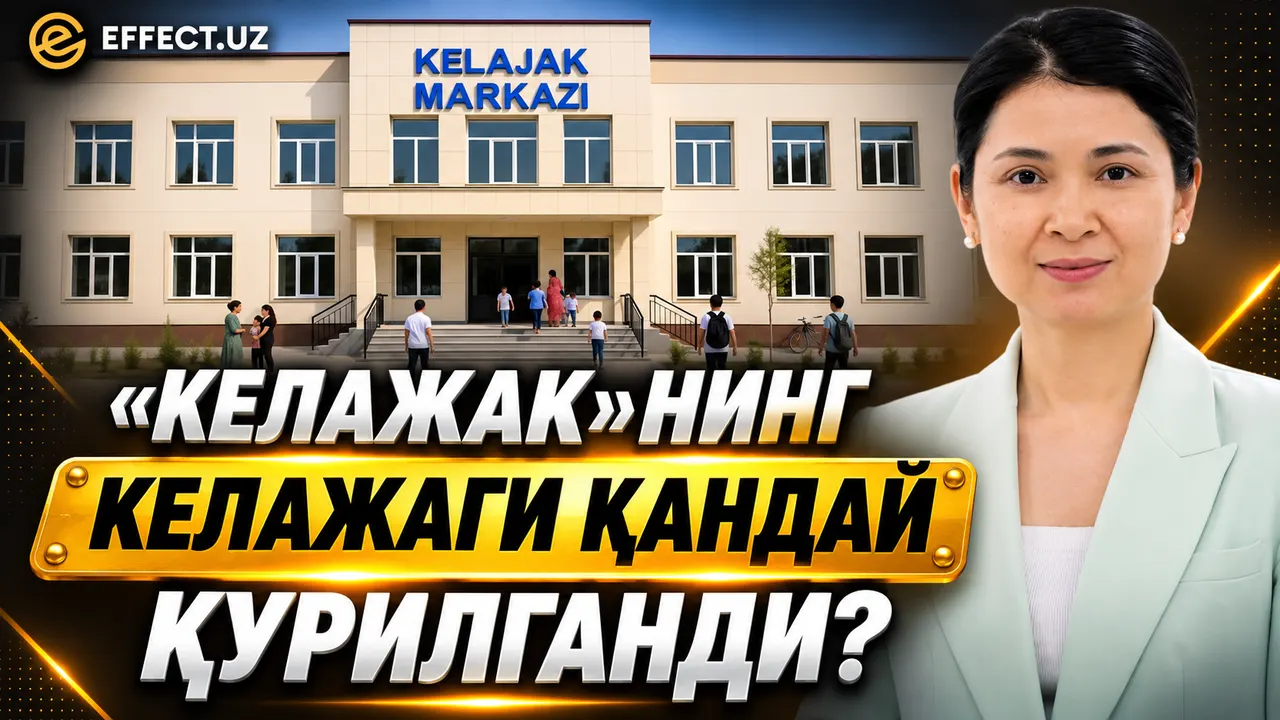
Serious questions are being raised in a collective appeal regarding director elections and employee rights. Introducing a new system is not easy. Especially when a new structure emerges in place of institutions formed over the years, changes affect not only names and functions, but also the labor destiny of hundreds of managers and employees who have worked there.
Such a complex process also took place during the organization of «Kelajak» centers on the basis of «Barkamol Avlod» children's schools. But in the collective appeal received by us, the issue goes far beyond the scope of simple organizational changes.
It asks for an investigation into the writing of resignation letters under pressure, the mismatch between order and application dates, the transparency of elections held for director positions, the appointment of certain candidates without meeting established requirements, and reports of corruption regarding positions.
The appeal was supposed to be sent to the Ombudsman — the Authorized Person of the Oliy Majlis of the Republic of Uzbekistan, but for some reasons this appeal did not reach the higher authorities.
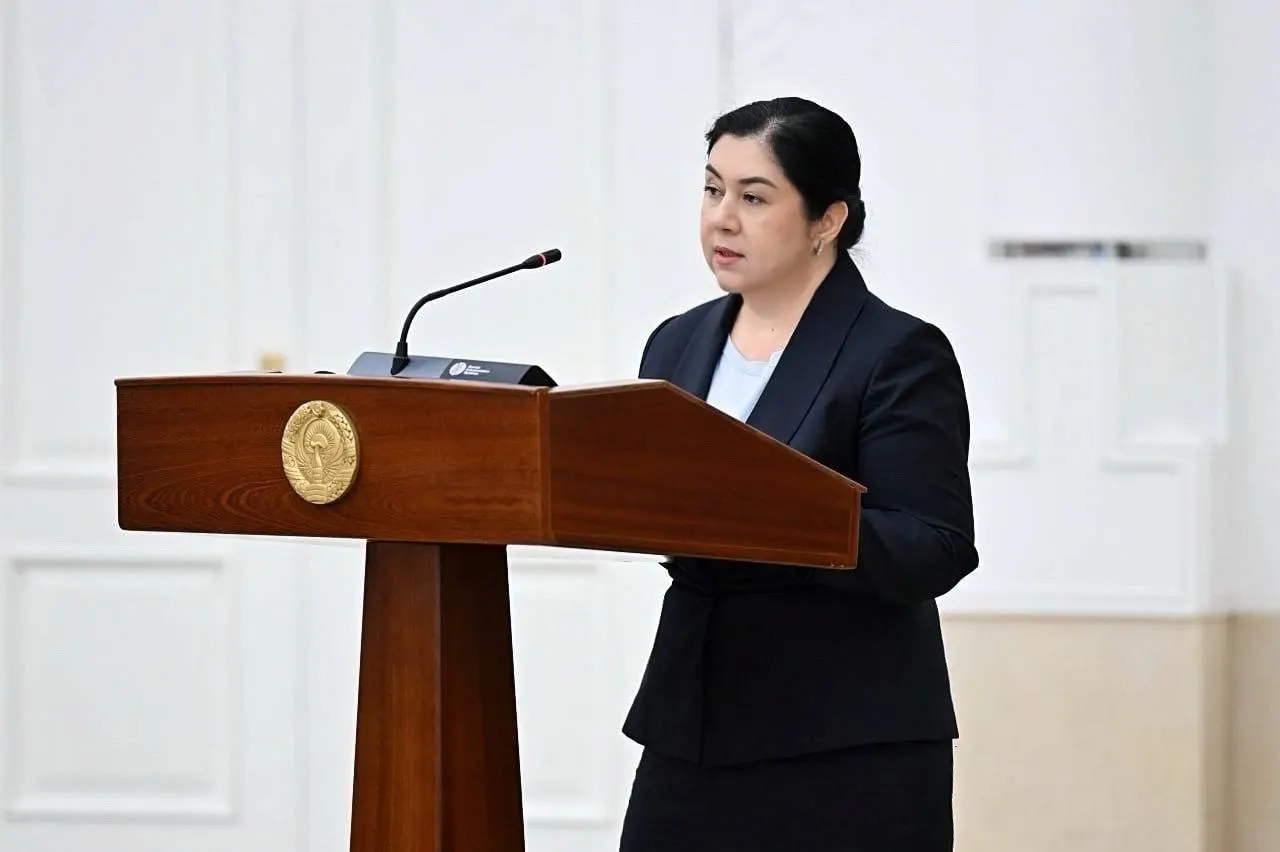
Each of these claims must be verified by authorized bodies based on documents. Because here we are talking not only about the labor rights of individual employees, but also about whether the process of organizing the new system was carried out on the basis of the principles of law, equality and transparency.
From «Barkamol Avlod» to «Kelajak»: what was the legal basis of the change?
By Presidential Decree No. PQ-277 adopted on September 8, 2025, it was determined to organize «Kelajak» centers on the basis of «Barkamol Avlod» children's schools. The document tasked filling the leadership positions of the new centers among worthy candidates who think strategically, possess modern knowledge and skills, are proactive, and have leadership potential. Later, by the Cabinet of Ministers Resolution No. 776 dated December 10, 2025, the regulation on «Kelajak» centers was approved.
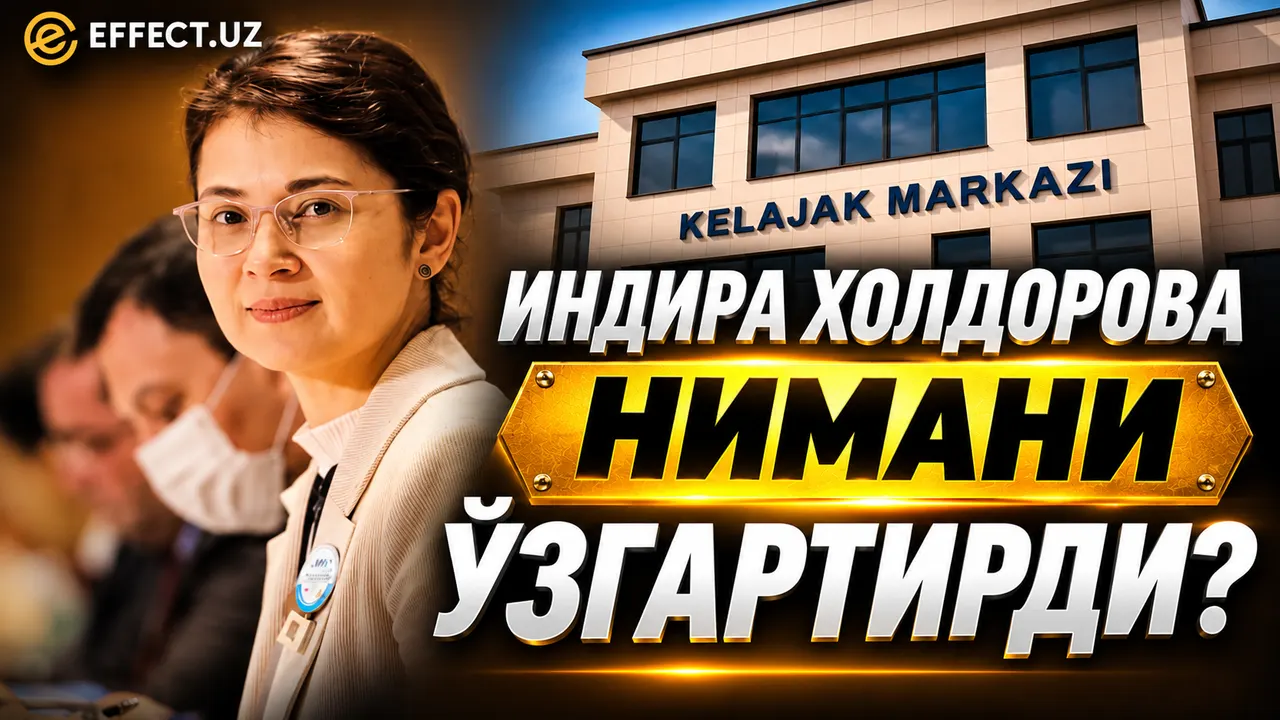
According to it, the center is headed by a director. The director of the Republican «Kelajak» center and their deputies are appointed by the minister. Directors of regional and Tashkent city centers are appointed by the minister upon the recommendation of the Republican «Kelajak» center, and directors of district and city centers are appointed by the director of the Republican «Kelajak» center, namely Indira Kholdorova.
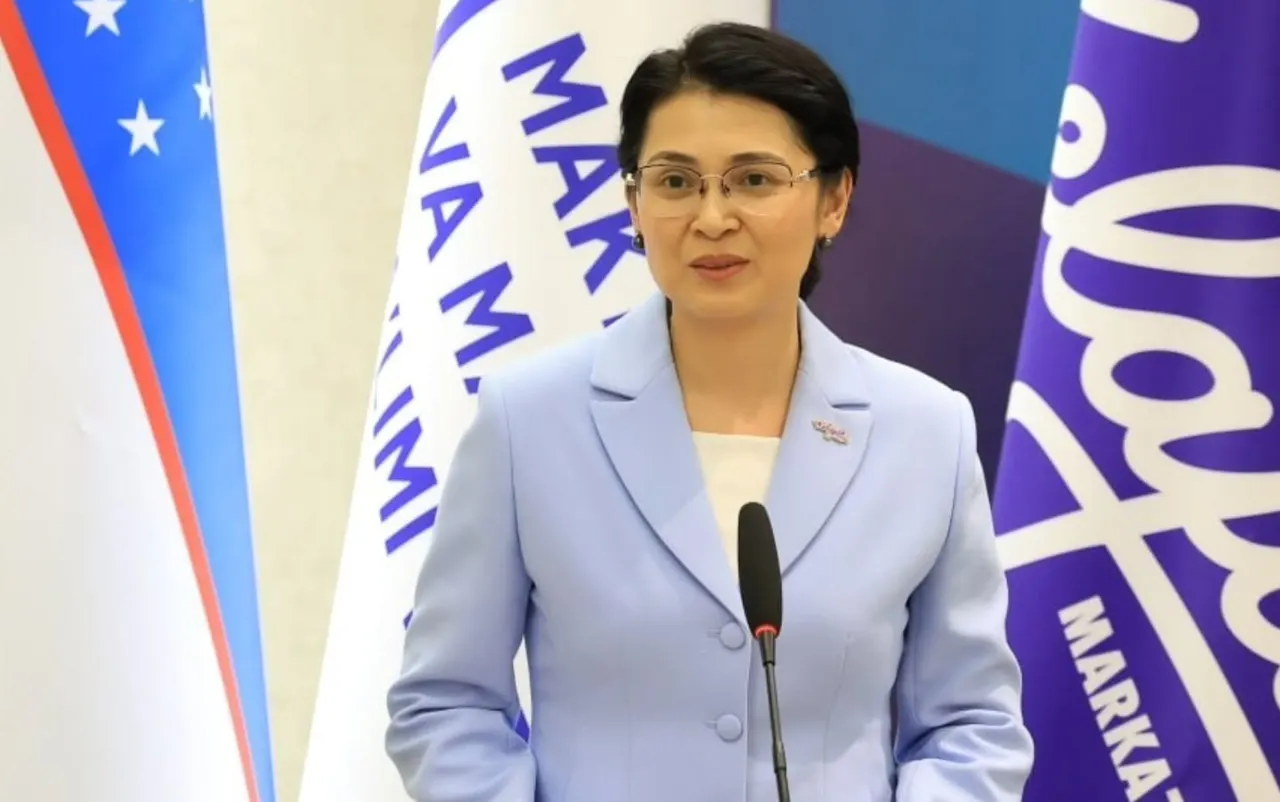
Hence, shaping leadership positions is one of the most important issues in the system. And serious objections are raised in the collective appeal regarding the transparency of this very process.
Resignation letters: voluntary desire or pressure?
According to the appeal, in December 2025, some directors and employees of «Barkamol Avlod» children's schools in Tashkent were made to write resignation letters. The applicants emphasized that there was psychological pressure during this process.
According to them, some managers were promised the opportunity to work in the new system or be reinstated in their positions, but later these promises did not materialize. If these situations are confirmed, the issue is not a simple "personnel reshuffle".
Because in the current Labor Code, the termination of an employment contract at the initiative of an employee is regulated separately. An employee's application to leave work of their own free will must be based on a genuine will. Termination of an employment contract at the initiative of the employer must be justified.
Therefore, one of the main questions in the appeal is:
Did the managers and employees who wrote resignation letters in December 2025 really make this decision of their own free will?
To answer this question, the mere existence of an application is not enough. The conditions under which the application was written, its content, date, basis for terminating the employment contract, order, documents given to the employee, and other evidence must be studied.
Application date December 13. And the order is December 9?
One of the most serious objections in the collective appeal is the contradiction between the dates in the documents. Although some resignation applications were formalized with the date of December 13, 2025, the dismissal orders were issued with the date of December 9.
If this information is confirmed by documents, a natural question arises:
On what basis was the order on dismissing the employee issued before the date the employee even wrote an application? It is possible that this is not just about a technical error.
According to the current Labor Code, the termination of an employment contract is carried out by persons authorized to hire and is formalized by the employer's order. The basis for terminating the employment contract must be clearly indicated in the order in exact compliance with the relevant legal norm.
Therefore, here it is important to compare the application date, the order date, the basis for terminating the employment contract, and the registration date of the documents.
The collective appeal also raises this very issue for a separate investigation.
How were new directors selected?
The process of selecting directors of «Kelajak» centers constitutes another large part of the appeal. The appeal states that tests and interviews for director positions were openly announced.
However, according to the applicants' claims, in some cases:
persons who did not participate in the test and interview;
candidates who do not meet the established qualification and work experience requirements;
certain persons who have previously worked in this position
may have been appointed to director positions.
These are claims that must be verified. Because Decree No. PQ-277 itself sets the task of filling leadership positions in «Kelajak» centers among worthy candidates. Therefore, not just the selection itself, but how the selection was conducted is also important.
How was a candidate who did not participate in the test appointed?
The collective appeal asks to separately investigate situations related to certain districts — including Mirabad, Chilanzar, Yashnabad, Uchtepa, Sergeli, Yakkasaray, and Yunusabad.
The applicants provided information that some candidates did not participate in the test or interview processes, and some did not meet the established qualification requirements.
If these claims are confirmed, a very important question arises:
On what basis was a candidate who did not pass or participate in the selection appointed to the director position?
In such a case, the answer should be sought not from subjective opinions, but from the commission protocol, test results, interview protocol, the candidate's documents, and the appointment order.
The claim about tests held in a "bunker"
Another serious situation is mentioned in the appeal. It states that during the two-stage test processes held for director positions on May 23, 2026, some currently working managers also participated, and in the opinion of the applicants, they were given unreasonably high scores. In addition, the tests were held in a "separate bunker", hidden from everyone.
This claim itself cannot be accepted as an accusation. But this is a specific situation that can be investigated.
For this purpose:
the place where the test was held;
list of participants;
start and end time of the test;
test results;
question database;
evaluation criteria;
commission protocol;
presence or absence of video surveillance recordings
can be determined.
If the process was open and fair, these documents will answer the questions. If it was the opposite, then the issue of liability also arises.
"Knowing 5 languages", "studying abroad" — were the requirements applied equally to everyone?
The applicants raised another issue. It was claimed that additional requirements such as knowing five languages, having studied abroad were set for some director candidates, but these requirements were not applied equally to all candidates. This also requires a serious investigation.
Because the main criteria in the selection must be clear and known to candidates in advance.
If a criterion required from one candidate is not applied to another candidate, questions arise about the objectivity of the selection result.
For this reason, the collective appeal demanded: to check whether additional requirements have a regulatory and legal basis and whether they were applied equally to all candidates.
Where does the responsibility of the leadership of «Kelajak» centers begin?
Resolution No. 776 defines the legal status and management procedure of the activities of «Kelajak» centers. The document also clearly indicates the center directors and the entities authorized to appoint them. Therefore, who made what decision during the process of selecting and appointing directors should also be visible from the documents.

Here, the public's question is not only directed at Indira Kholdorova.
Question:
It also applies to the selection commission, responsible officials, relevant regional departments, and authorized persons who made the final appointment.
If the selection was transparent — it is not difficult to show the documents justifying its results. Or if the employees resigned of their own free will — there should be no questions left regarding the dates between applications and orders. If equal conditions were created for all candidates — the test and interview results can show this.
13 demands: now it's the turn of the investigation
The authors of the collective appeal, in their appeal that was supposed to be sent to the Ombudsman, asked to investigate a number of situations.
In particular:
termination of employment contracts of managers and employees in December 2025;
the discrepancy between applications formalized with December 13 and orders dated December 9;
legality of dismissal documents;
whether there was pressure and deception;
director selections in March and May 2026;
test and interview results;
commission protocols;
compliance of candidates with qualification requirements;
claims about the appointment of persons who did not participate in the test and interview;
investigation of reports on corruption and conflict of interest was requested.
All these demands boil down to one question:
On what basis and on what principles were the «Kelajak» centers formed? How was the future of the center built?
What kind of answer is the public waiting for?
We have no intention of objecting to the new system itself. On the contrary, the expected result from the new system is qualified managers, a modern approach, transparent management, and a quality educational environment for children. But to achieve this goal, the system itself must also be built on a reliable foundation.
In dismissal — law.
In selection — equality.
In appointment — qualification.
In commission work — transparency.
In reports of corruption — impartial investigation.
All issues raised in the collective appeal boil down to these very principles.
Therefore, we evaluate each claim made in this appeal not as the absolute truth, but as a situation that needs to be investigated.
However, bypassing these questions is also impossible. Because «Kelajak» centers are a state system. Leadership positions there are state positions.
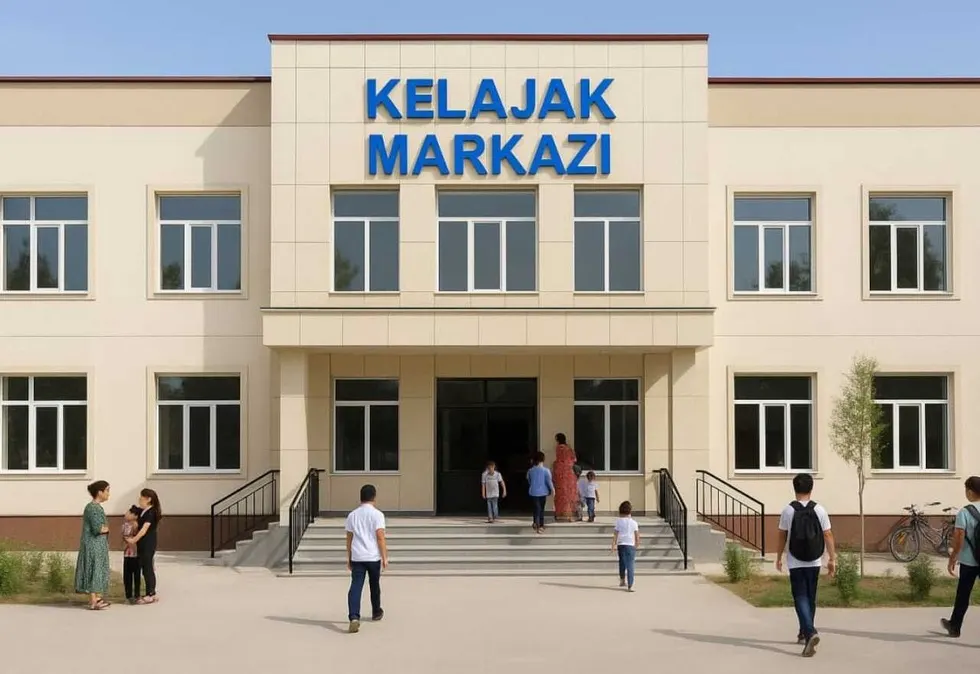
The labor rights of people who worked there are rights protected by law.
Therefore, the public's question is very clear:
To what extent were the rights of managers and employees who worked in the «Barkamol Avlod» system ensured during the process of organizing «Kelajak» centers?
And another question:
Were the selections held for director positions really equal, open, and transparent for all candidates?
Answers to these questions need to be provided not as an official statement, but as legal, open information based on documents.
EFFECT.UZ awaits the official response of the Director of the Republican «Kelajak» center Indira Kholdorova, the Ministry of Preschool and School Education, the Ministry of Justice, as well as authorized bodies on this issue.
If the situations mentioned in the appeal are groundless — this can be shown with documents. If they are confirmed — appropriate measures must be taken within the framework of the law. Because building «Kelajak» starts first of all with building trust.