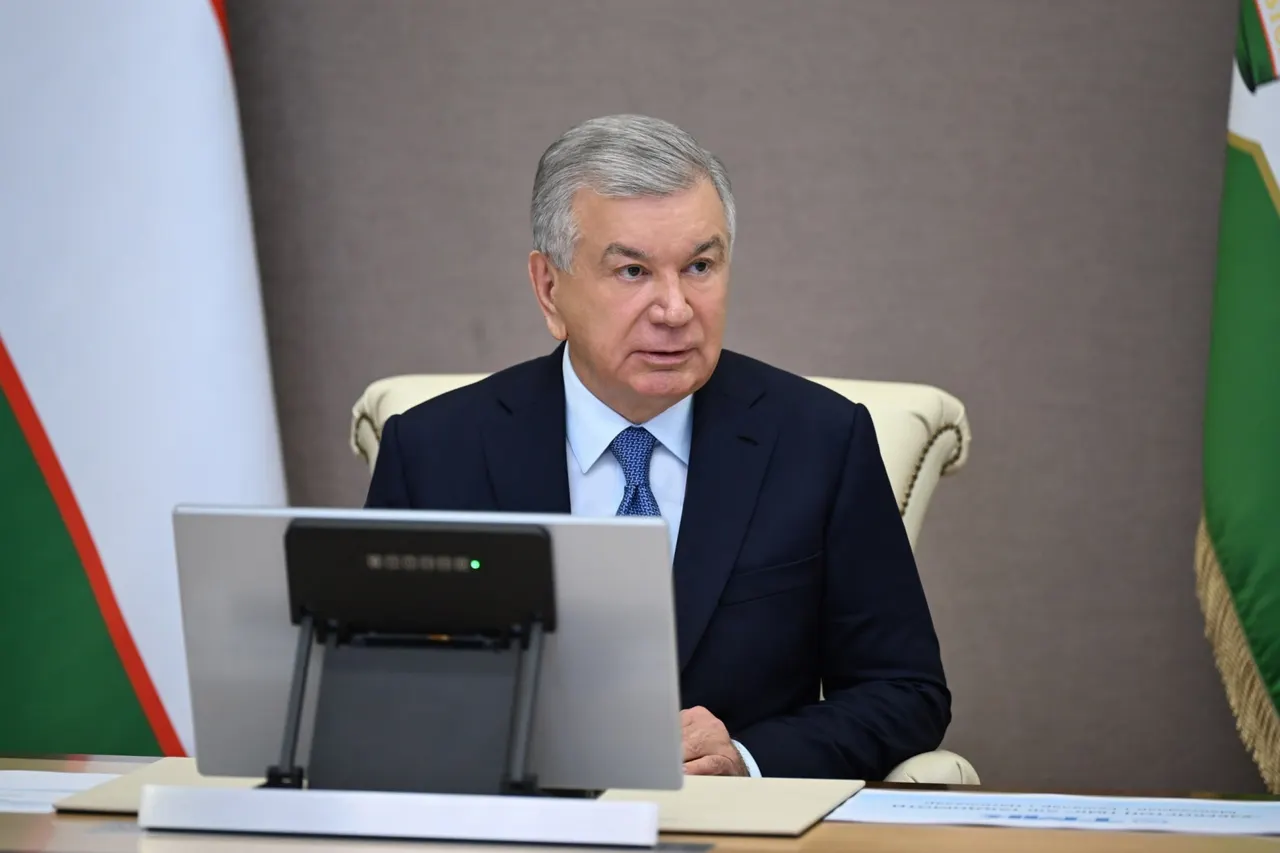
President Shavkat Mirziyoyev reviewed a presentation on the priority tasks for 2026 and future plans of the Navoiyuran enterprise and the Uzbekistan Technological Metals Combine JSC. The discussion covered expanding production in the mining industry, implementing new investment projects, and increasing export potential.
Today, demand for critical minerals and metals is growing in the global market. While demand for traditional metals is growing by an average of 1 percent per year, this figure is 10 percent in the critical minerals market.
In this regard, work is underway in the country to effectively utilize the existing mineral resource base, produce high-value-added products, and expand exports.
Special attention was paid to the activities of the Uzbekistan Technological Metals Combine during the presentation. By the end of this year, it is planned to launch 12 investment projects and expand the production of high-purity selenium and tellurium.
The President set the task of mastering new production areas for critical minerals. In addition to the current 5 types of products—tungsten, molybdenum, selenium, tellurium, and rhenium—it is intended to establish the production of 11 more types of products.
According to the plan, the goal is to increase the production volume of 16 types of critical metals by $2.7 billion by 2030.
Major projects for the deep processing of tungsten have also been developed. It is planned to attract $1.1 billion in investments for their implementation and to reach a production volume of nearly $2.2 billion in this sector by 2030.
Furthermore, issues regarding increasing uranium production, developing new mines, and expanding geological exploration at the Navoiyuran enterprise were discussed.
This year, it is planned to develop production infrastructure, launch additional sorption facilities, and create 250 new jobs.
The President emphasized the need to expand the use of alternative technologies in production and to increase the share of reagents replacing sulfuric acid to 40 percent by 2030.
In accordance with the general plans, it is intended to increase the volume of uranium production from 7,500 tons this year to 15,000 tons by 2030, and to bring the volume of identified reserves to 200,000 tons.
At the end of the presentation, officials were given instructions on the timely implementation of investment projects, strengthening the mineral resource base, launching new technological capacities, and increasing export volumes.