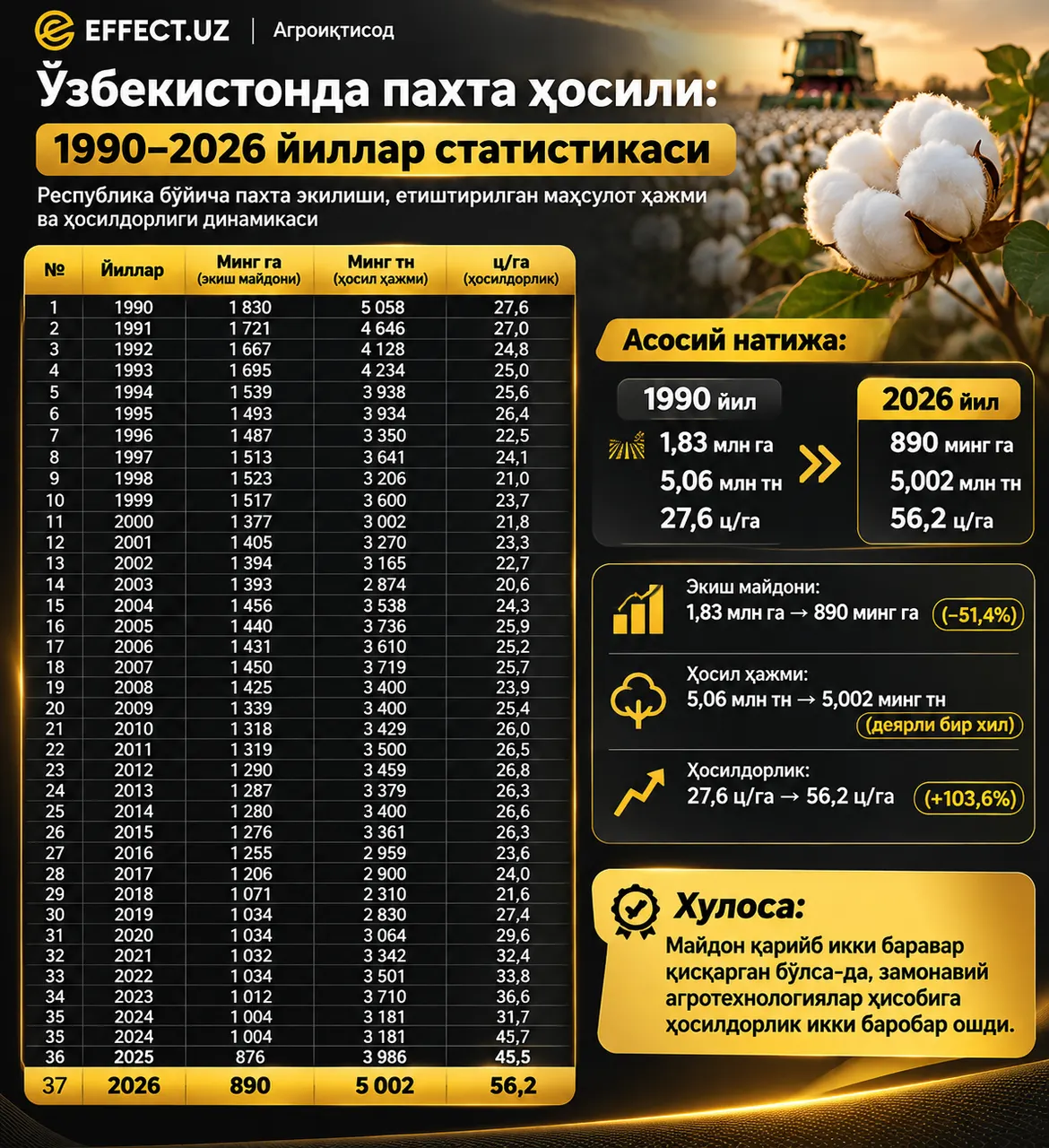
A new milestone in cotton cultivation was recorded in Uzbekistan in 2026. Across the republic, 5 million 2 thousand tons of raw cotton were grown, and the average yield amounted to 56.2 centners.
According to the presented statistics for 1990–2026, in 1990, 5.058 million tons of cotton were harvested from an area of 1.83 million hectares, with a yield of 27.6 centners. In 2026, however, a harvest of 5.002 million tons was obtained from an area of 890 thousand hectares, and the yield reached 56.2 centners.
A number of measures, ranging from planting schemes to seed production, defoliation, mechanization, digital monitoring, and financial incentives, were applied to achieve this result.
The planting scheme was changed
The 90 and 60 centimeter planting schemes for cotton cultivation were abandoned, and a transition was made to the 76 centimeter double-row and single-row planting scheme.
Specifically, in the 76×10 centimeter double-row method, 220–240 thousand seedlings per hectare were placed, and in the 76 centimeter scheme, 160–180 thousand seedlings. The previous indicator was around 80–110 thousand seedlings.
In the current year, the 76×10 centimeter double-row scheme was applied on 670.7 thousand hectares, which is 75 percent of the areas, and the 76 centimeter scheme was applied on 218.8 thousand hectares.
Foreign and local varieties were used
Across the republic, foreign varieties resistant to bollworms and herbicides were planted on 603.8 thousand hectares, and early-ripening local varieties with high fiber quality were planted on 285.7 thousand hectares.
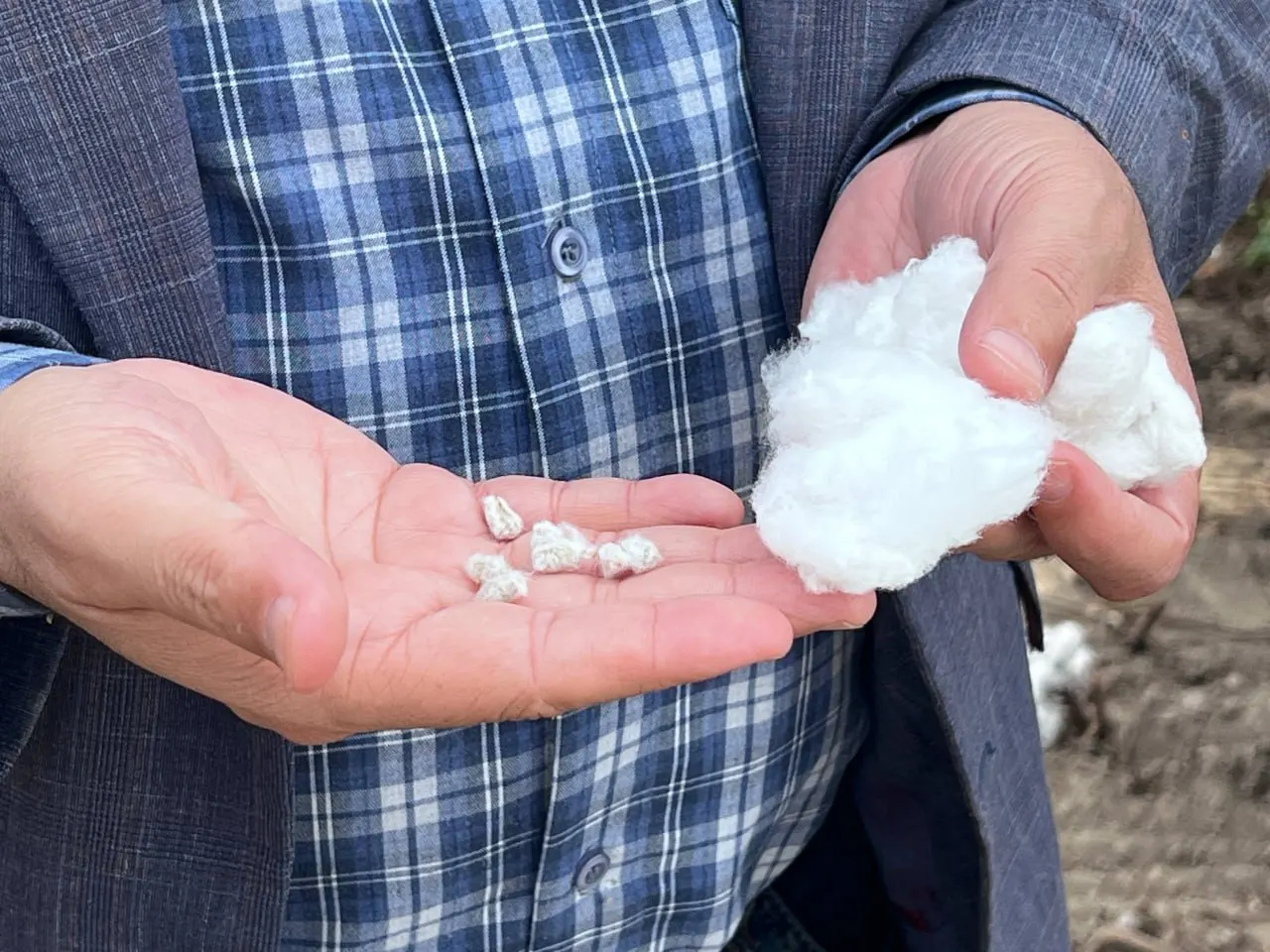
Additionally, seed planting using the Xinjiang method was established on 305.2 thousand hectares. This indicator is 124 thousand hectares more compared to the previous year.
The principle of the "8 laws" in cotton growing
Eight main directions that must be followed in cotton cultivation for farmers and clusters have been developed based on scientific recommendations.

They cover seedling density, planting scheme, plant management, nutrition, ripening of the cotton plant, establishment of protection zones, compliance with field culture and laws, and an ecologically clean field.
Measures to make the cotton plant resistant to heat and pests
In order to increase the resistance of cotton to extreme heat and lack of water and to reduce the impact of pests, treatments were carried out with boric acid, aspirin, yeast, and silicon fertilizers.
During the harvest ripening process, defoliation and desiccation work was organized in three stages.
First, treatment with ethephon was carried out to accelerate the "aging" of the cotton plant. Then, mild-acting defoliants were used. In the final stage, strong-acting preparations and desiccants were utilized.
Mechanization in cotton harvesting was strengthened
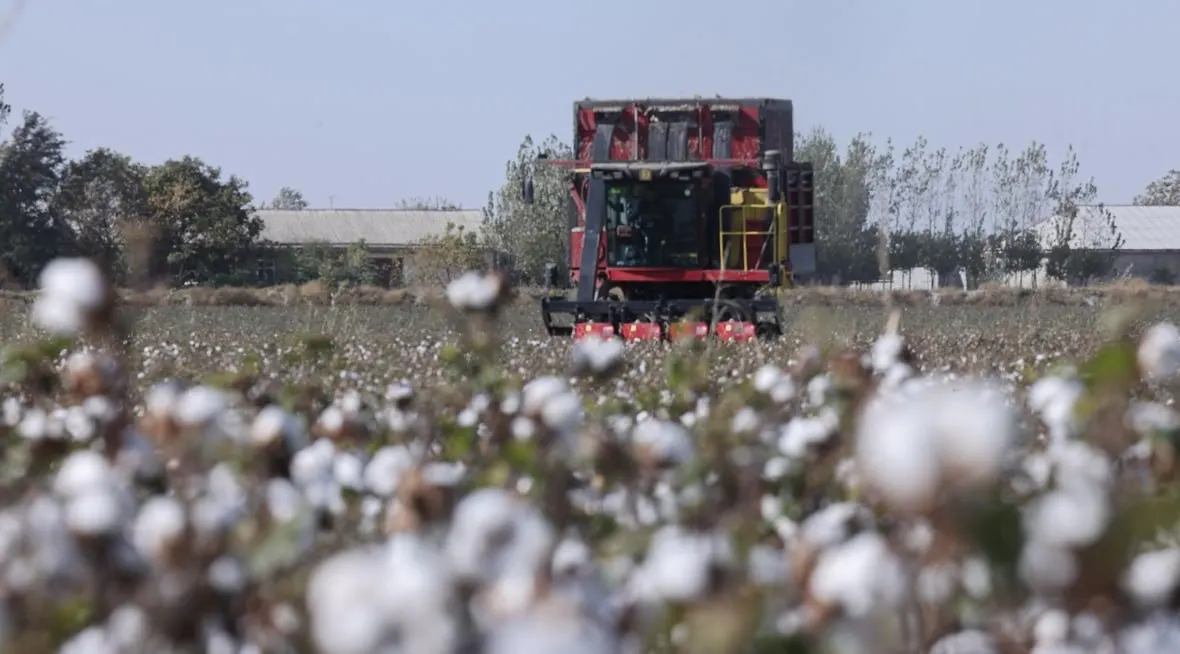
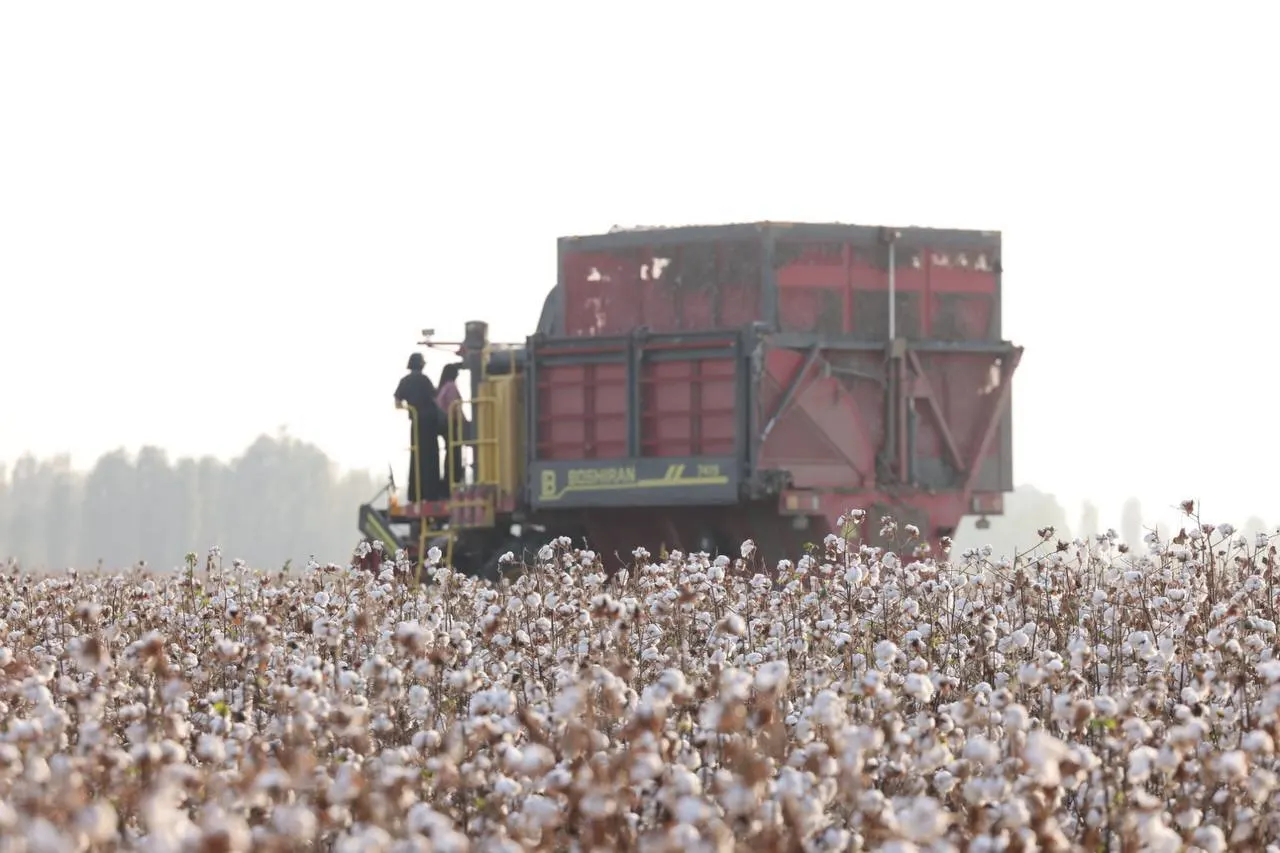
In 2026, 2.8 thousand cotton harvesting machines were involved in the cotton harvest. As a result, the goal was set to harvest the crop in a single pass and shorten the harvesting period from two months to one month.
The "Master-Apprentice" system was digitalized
Experienced farmers and clusters numbering 946, who achieved high yields, were assigned as mentors to 4,658 farmers who obtained less than 30 centners per hectare in 2025. Here, one mentor was assigned to every five apprentices.
For the 2026 cotton harvest, these processes were monitored through the "Digital Agriculture" platform. Additionally, the "Mentor's Notebook" was developed to record practical instructions given by mentors and evaluate the results.
12 trillion soums of preferential credit for cotton growing
In order to timely finance agrotechnical measures in cotton cultivation, 12 trillion soums of preferential credit were allocated for the 2026 harvest.
Furthermore, a mechanism of allocating a 1 million soum subsidy for each ton of raw cotton sold through exchange trading was applied. The total amount of subsidies amounted to 2.4 trillion soums.
Thus, despite the reduction in cotton fields in 2026, the yield and gross harvest increased significantly.
While official data shows that 3.986 million tons of cotton were obtained from 876 thousand hectares in 2025, 5.002 million tons of harvest were grown from an area of 890 thousand hectares in 2026. The yield increased from 45.5 centners to 56.2 centners in one year.
Consequently, the harvest exceeding 5 million tons in 2026 was related not only to expanding the cultivated area, but rather to the combined application of planting schemes, variety selection, agrotechnology, mechanization, digital monitoring, and the financial support system.