Parents make tuition payments for their children's education. And the university must answer where and under what conditions it teaches students, and how it guarantees their right to education. But in the situation surrounding Navoi Innovations University, there are precisely no answers to such questions.
The complaints gathered around Navoi Innovations University, operating in the Navoi region, have now gone beyond ordinary domestic or internal organizational problems. In the appeals sent on behalf of parents, students, and university staff, serious questions have been raised regarding the legal status of educational buildings, the material and technical base, teachers' working conditions, financial activity, potential conflicts of interest in management, and the results of inspections conducted by state bodies.
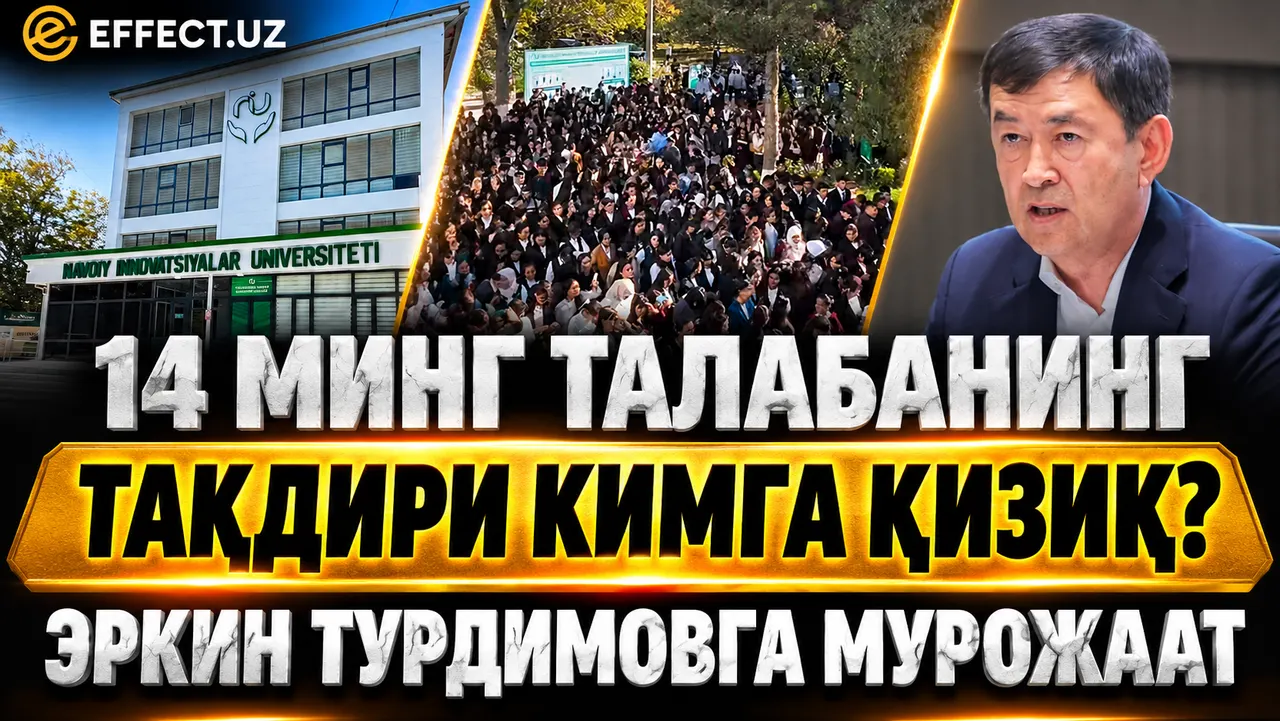
The most alarming aspect is that various appeals state that around 12–14 thousand students are studying. Their exact number must be checked based on official data. But whether the figure is 12 thousand, 13 thousand, or 14 thousand — here we are talking about the fate of thousands of young people. They should not face disruptions in the educational process as a result of the organizational and financial decisions of the university management.
Ministry ordered an inspection, but with no results?
Among the submitted documents is a letter from the former Ministry of Higher Education, Science and Innovations dated April 24, 2026. It states that in connection with the appeals received by the ministry, the minister's order No. 156 was adopted, and based on this order, it was determined that the activities of "Navoi Innovations University" LLC would be studied in accordance with the inspection program on April 27–29, 2026.
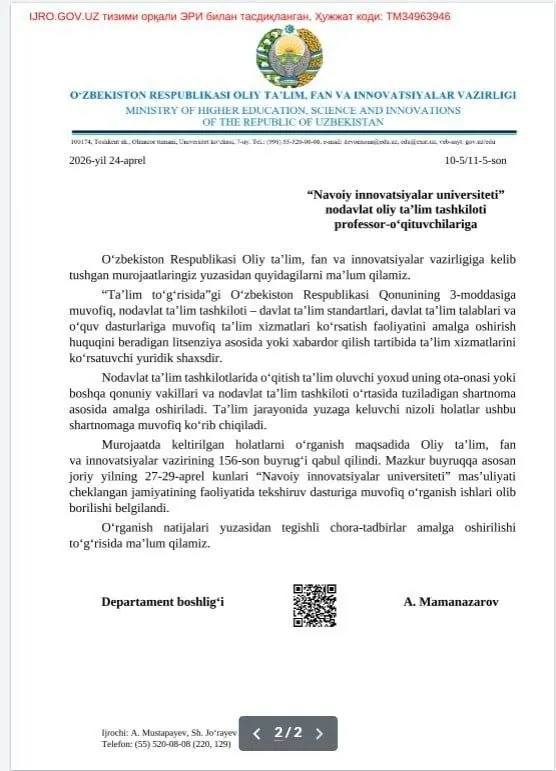
This means that objections regarding the university's activities had previously been forwarded to the authorized state body, and an official study was scheduled.
However, according to parents and applicants, even after this, the problems they raised did not find a solution. If an inspection was carried out, what was its result? What shortcomings were identified? What instructions were given to the university management? Were they fulfilled?
To answer these questions, official documents regarding the inspection report, the final reference, and the measures taken must be submitted to the public.
Otherwise, the letter about the inspection being scheduled does not mean the problem has been solved. The purpose of state control is not to schedule a study on paper, but to eliminate identified legal violations and protect citizens' rights.
Block A, Block C, and conditions created for students
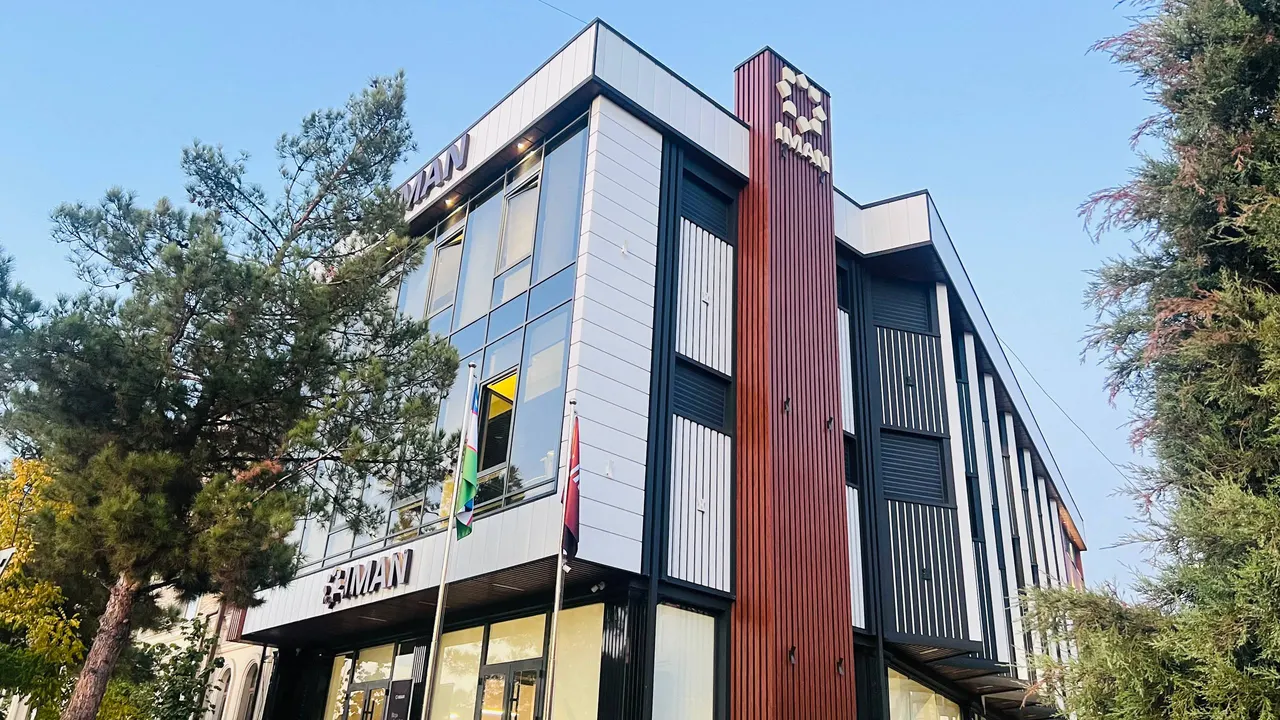
One of the main objections in the appeals is related to the university's material and technical base and educational buildings. The presented photographs show the building indicated as Block A of the university and a separate building designated as Block C. In the collage featuring Block C, it is also shown as a "driving school".
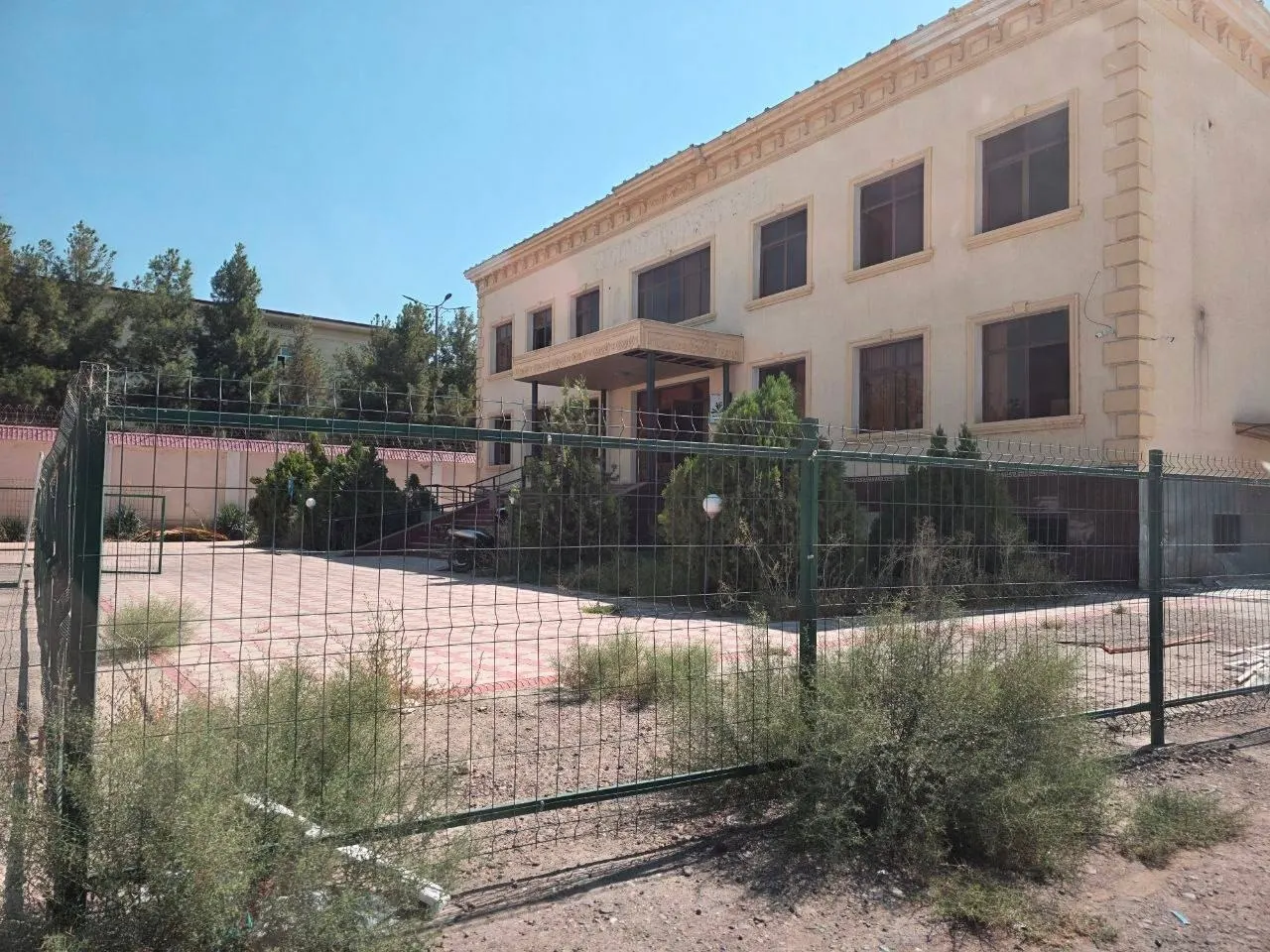
In the appeals of parents and students, doubts were expressed that the university is organizing some classes in a legal technical school, a driving school, and other buildings, and whether these addresses are reflected in licenses and other permitting documents.
One thing needs to be clarified here: the appearance of buildings does not prove whether the educational process is organized legally or illegally in them. For this, the educational addresses indicated in the university license, cadastre documents, lease agreements, and the current educational process must be compared with each other.
At the same time, information was also provided about the basement part of Block A being flooded with water when it rains. If this situation is confirmed, the purpose for which the basement is used, whether classes are held there or students are present, and compliance with electrical and sanitary safety requirements must be separately inspected.
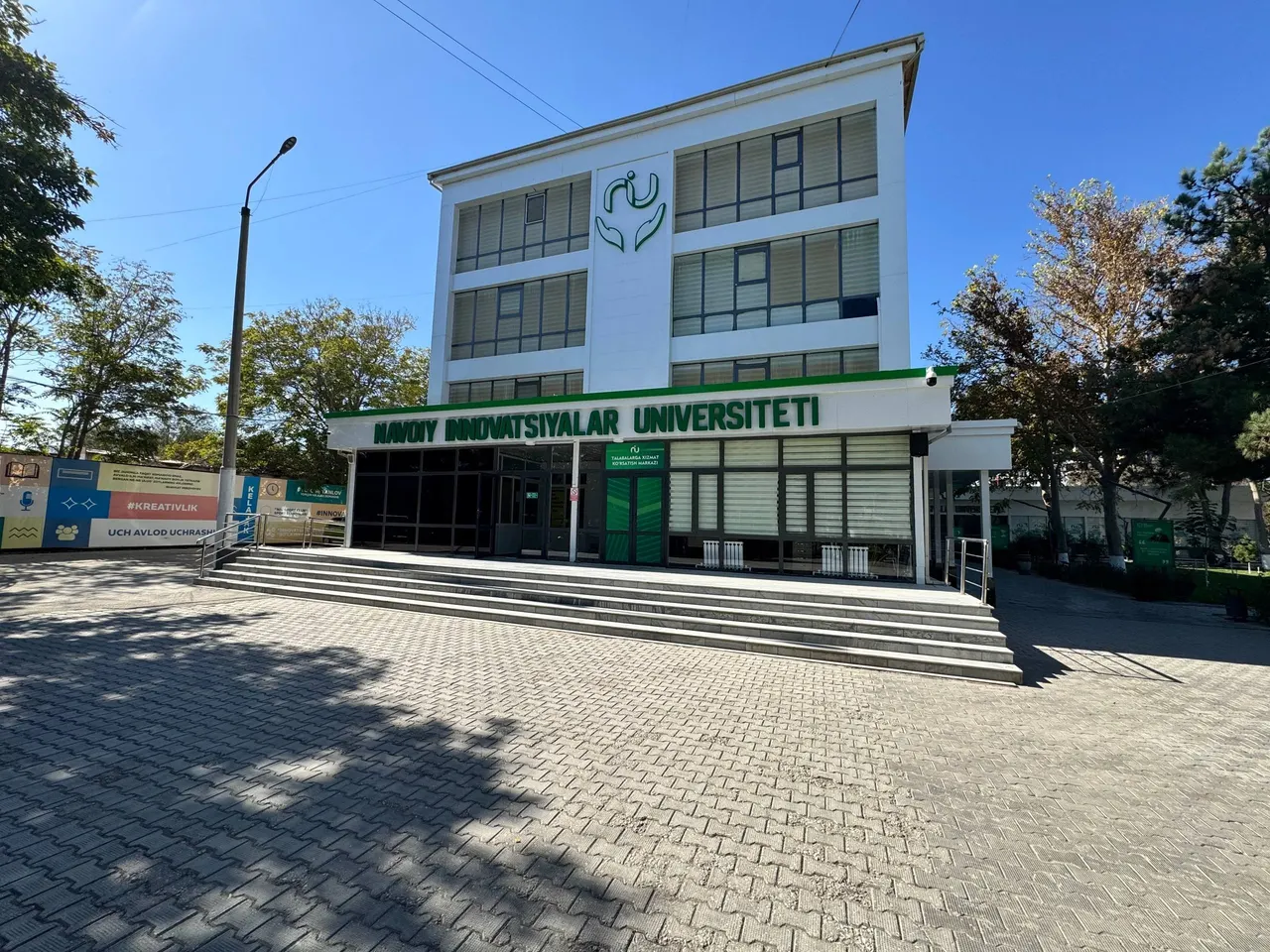
A simple question is asked of the university management: is there sufficient, safe infrastructure that meets established requirements for the education of thousands of students?
What do documents regarding the lease of state property show?
Another important document provided is a letter dated May 25, 2026, from the Navoi regional territorial department of the Center for Efficient Use of State Property Objects under the State Assets Management Agency.
It notes that, in accordance with the President's resolution No. PQ-278 dated September 8, 2025, the building of the state institution "Navoi Legal Technical School" was transferred to the engineering school in the city of Navoi.
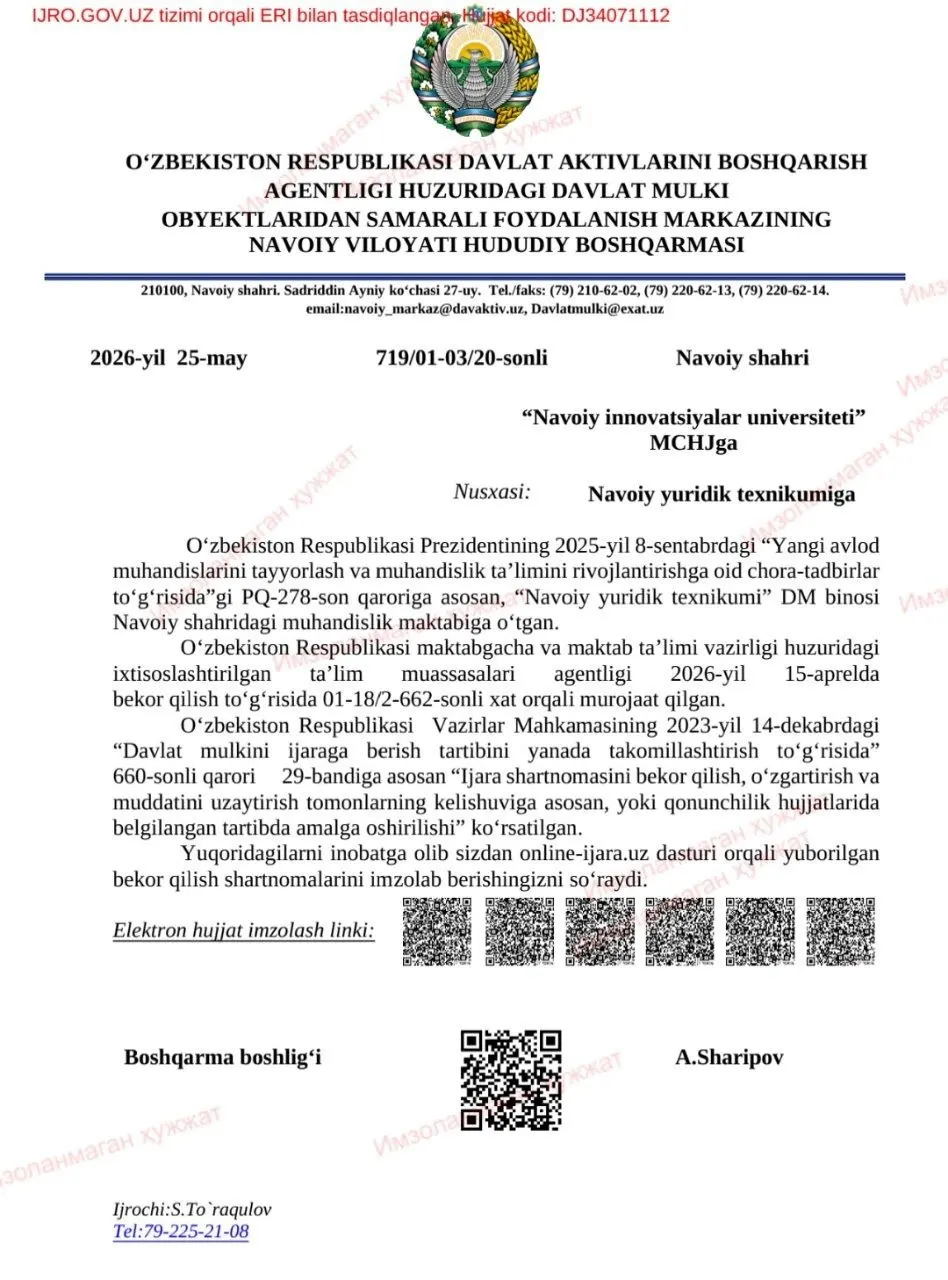
It is also indicated that the Agency for Specialized Educational Institutions under the Ministry of Preschool and School Education appealed with a letter dated April 15, 2026. The State Property Center, in turn, asked the university to sign documents canceling lease agreements sent through the online lease system.
This document shows that there has been a change in lease relations regarding state property objects used by the university. However, the letter itself does not confirm that the agreements were actually canceled or that the building was vacated.
Therefore, several important questions arise: for which building was the lease agreement supposed to be canceled? Was the agreement actually canceled? If canceled, on what legal basis did the university subsequently use this building? Most importantly, how did these changes affect the students' educational process?
Any legal change in the use of state property must be pre-planned and must not harm students' right to receive an education.
Where do 14 thousand students study?
One of the most serious concerns in the appeals is the claims that the university's educational buildings are insufficient and that there is a disproportion between the number of students and the available infrastructure.
In the parents' appeal, some information states that the number of students is around 14 thousand. In another appeal, more than 12 thousand students are mentioned. An emergency appeal sent on behalf of the university community notes that nearly 13 thousand young people are studying at the institution, and over 300 professors, teachers, and staff are working.
This discrepancy in numbers must also be separately inspected. How many students are actually at the university? How many of them study full-time, part-time, or in other forms of education? At which address is the educational process organized for each field of study? Do the capacities of the buildings match the number of students?
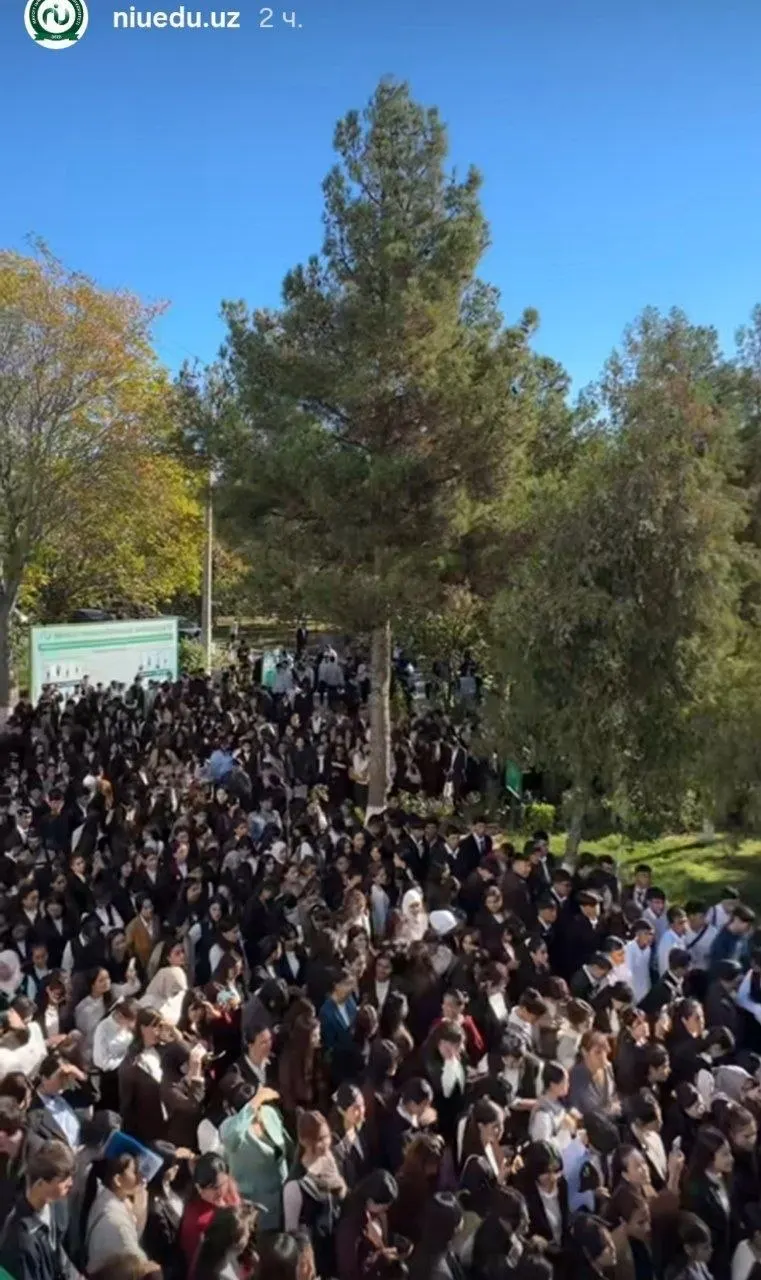
The appeal also provides information that on October 5, 2026, first-year students were called simultaneously, and some classes were not held or they were redirected to other places due to a lack of classrooms. These situations should also be verified through HEMIS data, class schedules, classroom capacities, and student statements.
If nearly 14 thousand students are indeed studying at the university, classrooms, laboratories, a library, sanitary conditions, and other infrastructure necessary for their education must be up to standard.
This is not a matter at the discretion of the university management. This is an obligation related to the legal right of students to receive an education.
Serious claims regarding financial activity and conflict of interest
A new emergency appeal sent to the President and a number of authorized state bodies on behalf of the university community also contains serious accusations regarding financial activity.
The authors of the appeal claim that there may have been a conflict of interest during the period when the university's co-director Eldost Rakhmonov worked in the ministry system and during the process of issuing a license to the university. They also requested an independent audit regarding financial operations, tuition payments, tax obligations, and the expenditure of funds at the university.
The appeal claims that over the past four years, more than 150 billion soms per year, and a total of around 500–600 billion soms, have flowed into the university from student tuition fees. At the same service entities, serious accusations were also made regarding cashing out funds through fake service providers, tax evasion, and embezzlement.
The appeal also writes that close relatives, acquaintances, and classmates of the manager were appointed to internal audit and control positions, and that employees who expressed objections were pressured and unjustly dismissed.
Of course, none of these claims can be evaluated as proven crimes without an inspection. However, they cannot be simply dismissed either—especially at a time when tuition funds paid by thousands of students and the financial transparency of the educational institution are under discussion.
For this reason, the university's financial activity for 2022–2026, bank account operations, tuition revenues, expenses, construction and lease payments, and agreements with service organizations must be independently and impartially inspected.
If the funds were spent legally, the audit results will show this. If there are legal violations, they must be given a legal assessment.
Teachers' labor rights are also called into question
Objections were also raised in the appeals regarding the teaching load and working conditions of professors and teachers. In particular, information was provided that some teachers were assigned up to 650–800 hours of classroom teaching for a single rate, that there are problems with salaries and additional payments, and that employees who voiced objections were threatened with dismissal.
These figures and situations must be checked through employment contracts, tarification documents, class schedules, timesheets, and payrolls.
If the teachers themselves, who are responsible for the quality of education at the university, work in conditions where their labor rights are not protected, this may also have a negative impact on the educational process.
There are questions that must be answered before continuing new admissions
The authors of the appeal also asked to stop the process of admitting new students for the 2026–2027 academic year. In their opinion, continuing new admissions at a time when the issue of buildings and conditions has not been resolved even for existing students could further aggravate the problem in the future.
This objection must be taken seriously. Because new admissions are not just accepting tuition fees from applicants. This means taking on new obligations by the university, teaching them based on established educational programs, and providing them with necessary classrooms and teachers.
Before continuing new admissions, the university management must provide clear information to the public about how the education of existing students is organized, the legal status of the buildings, and educational capacity.
If the education of current students is not fully ensured, on what basis can responsibility be further increased by admitting new applicants?
The ministry has changed, but the problem should not remain the same
Previous appeals were sent to the Ministry of Higher Education, Science and Innovations. Now, the ministry has been reorganized, and responsibilities in the fields of education and science have passed to a new ministry.
Therefore, this issue should also be taken under special control by the new management — the Ministry of Education and Science. A concrete response confirmed by documents, rather than a general and formal response to the objections surrounding the university, is expected from the head of the ministry, Erkinjon Turdimov.
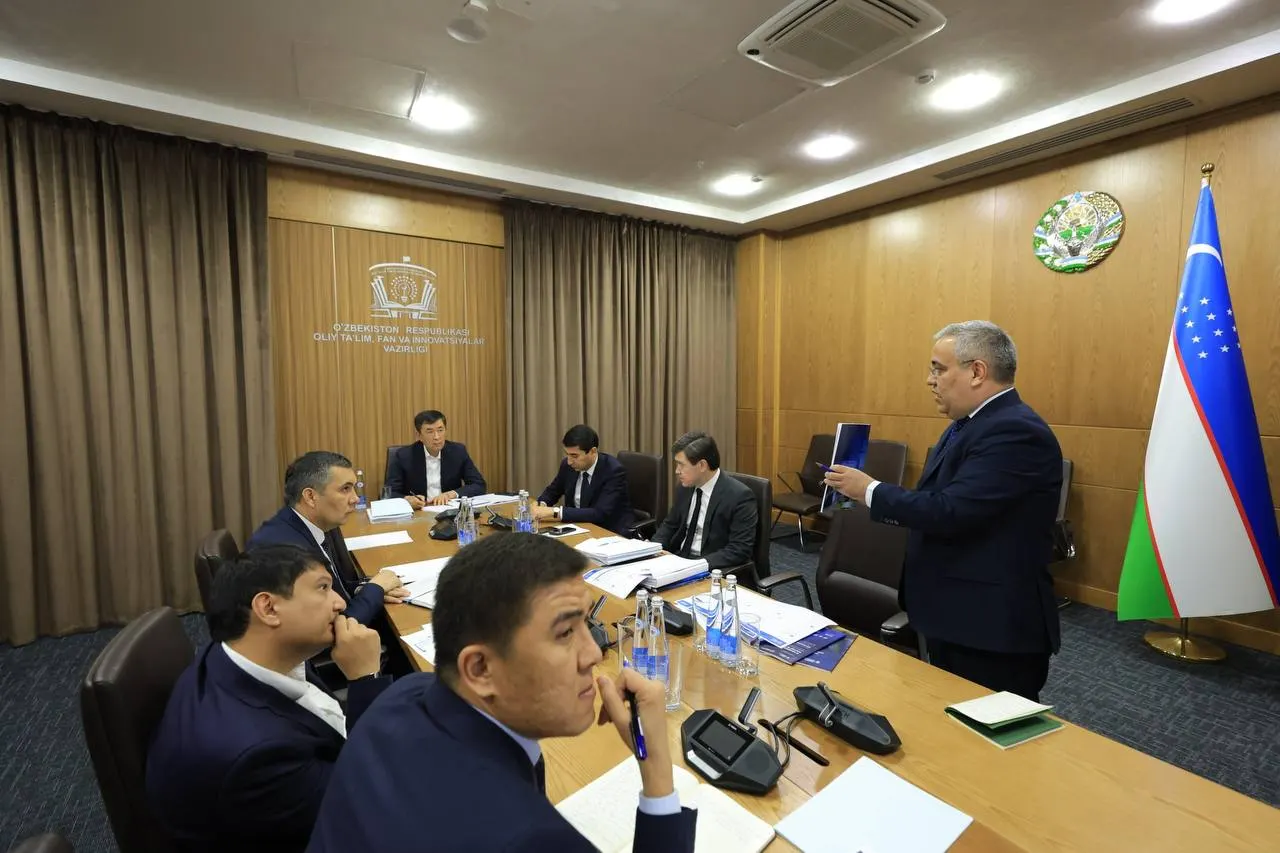
If an inspection was scheduled in April, its results should be made public; if a letter regarding the lease of state property was sent in May, the subsequent fate of the agreements should be announced; and official figures regarding the number of students and the capacity of educational buildings must be provided.
The issue should not be limited only to the university management providing comments. Here, there are interconnected questions regarding the quality of education, state property, financial transparency, and the rights of thousands of young people.
EFFECT.UZ requests official comments and disclosure of documents
Regarding the above situations, we request official responses and documented comments from the following agencies:
Ministry of Education and Science — regarding the university's current license, educational addresses, number of students, capacity of educational buildings, results of the study conducted on April 27–29, and identified shortcomings;
State Assets Management Agency — regarding state property objects used by the university, lease agreements, and their cancellation;
Tax authorities — regarding whether a legal inspection was conducted concerning the financial turnover and tax obligations mentioned in the appeal;
Anti-Corruption Agency — regarding claims related to potential conflicts of interest in management and personnel appointments;
General Prosecutor's Office — on the matter of providing a legal assessment of financial violations, the use of state property, and other circumstances mentioned in the appeals.
We also ask the university management to provide open and document-based answers to all questions. First of all, students need a clear answer: where, under what conditions, and on what legal basis will they continue to receive their education?
Nearly 14 thousand students is not just statistics. Each of them came to the university with their parents' trust, funds, and future plans. Their right to receive an education must not become a victim of the management's organizational mistakes, potential financial problems, or unresolved relations regarding state property.
The university management must not forget one thing: the right to accept student tuition fees comes with the obligation to provide them with quality and legal education. If there is no ability to fulfill this obligation, the consequences cannot be shifted onto the shoulders of students and parents.
The educational institution is responsible for the future of thousands of young people. And how the university management fulfills this responsibility is no longer just an internal matter — it has become an issue demanded by the public and state control.