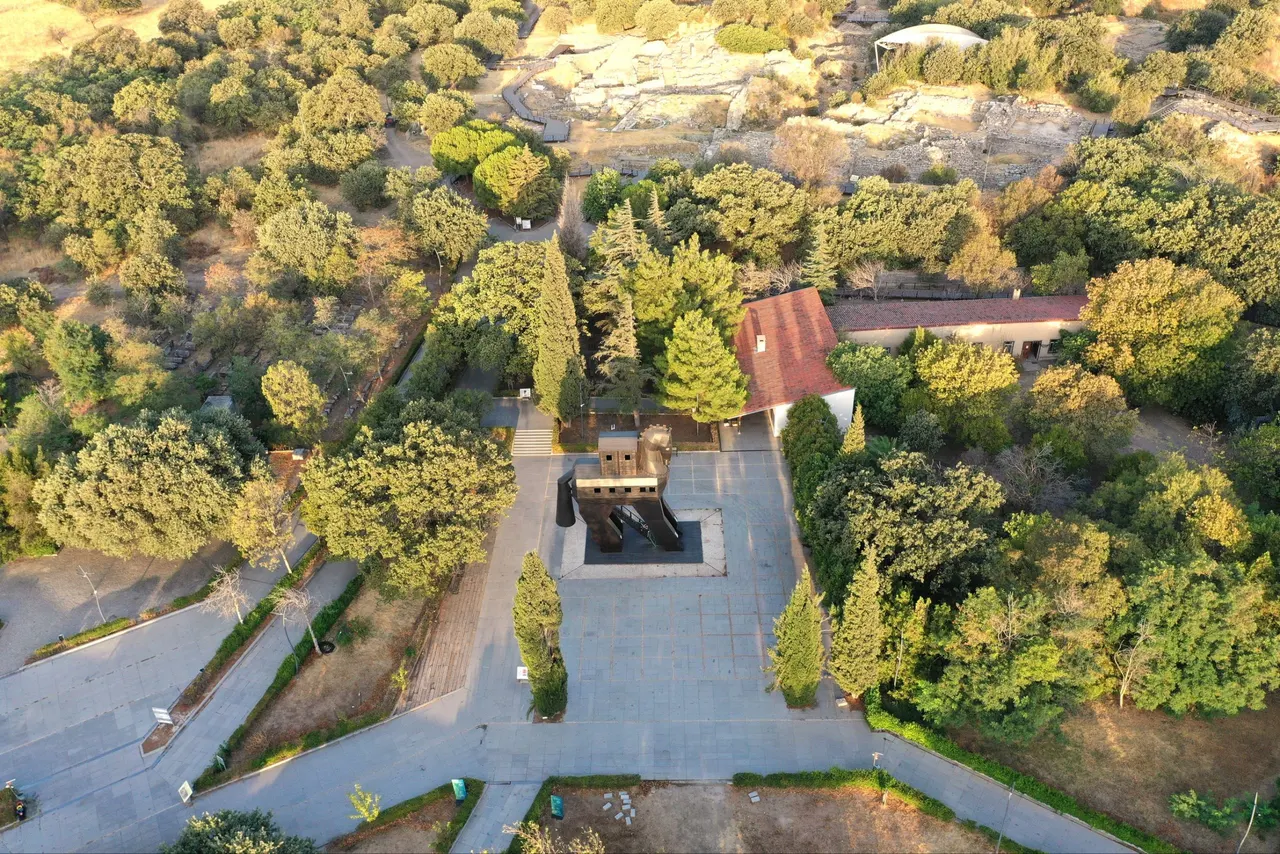
A new screen adaptation of Homer's immortal epic, 'The Odyssey,' is currently generating great interest in cinemas around the world. Troy, depicted in the poems 'Iliad' and 'Odyssey,' holds an important place not only in legends but also in history. Located in Türkiye's Çanakkale province, this site preserves more than five thousand years of history.
Archaeological excavations continuing under the leadership of the Turkish Ministry of Culture and Tourism are revealing new facets of Troy's history. As part of the 2026 excavation season, archaeologists and researchers are steadily working to identify new evidence about Troy and the legendary Trojan War. Many finds that have remained buried for centuries now allow a deeper understanding of the ancient city's past.
New excavations uncover traces of the Trojan War
During the latest archaeological excavations in Troy, remains of columned streets and ancient market stalls were found in the Lower City of the Roman period. These finds provide new information about urban life and trade of that era. At the same time, researchers are studying traces of destruction linked to the legendary Trojan War around the South Gate in the Troy VI–VII cultural layers. Excavations also continue on the territory of the Troy citadel, aimed at identifying new finds related to Bronze Age palace complexes.
Each new find opens previously unknown pages of Troy's history. That is why the ancient city remains one of the important destinations for research and travel for history and mythology enthusiasts.
Ten cultural layers embodying five thousand years of history
Troy is one of the most unique archaeological monuments in the world. The ancient city is famous above all for the legends of the Trojan War. This site, inscribed on the UNESCO World Heritage List, embodies more than five thousand years of history — from the Early Bronze Age to the Eastern Roman (Byzantine) period. The ten historical and cultural layers identified in the city allow us to consistently trace life and development across different eras.
From the majestic defensive walls of Troy VI to traces of Roman-period urban life, archaeological finds allow history to be felt through layers of time.
Throughout history, Troy has been of particular importance, primarily due to its advantageous geographical location. Situated at a strategic crossroads between Europe and Asia, as well as between the Aegean and Black Seas, the city has remained a continuously inhabited place for centuries. The winds and sea currents of the Dardanelles Strait created a safe haven for ships, making Troy one of the important centers of trade and cultural exchange.
Where legend meets history
It is no coincidence that a city of such enormous historical significance as Troy has been immortalized in the works of great poets such as Homer and Virgil. Their poems elevated the name of Troy from the status of an ordinary historical city to an integral part of world cultural heritage. While Homer's 'Iliad' is recognized as a symbol of heroism, Virgil's 'Aeneid' depicts Troy as the legendary origin of Roman civilization. According to the work, after the fall of the city, Prince Aeneas sets off on a long journey to found a 'New Troy' and finally reaches Latium. Legend has it that in 753 BC his descendants founded the city of Rome right there.
According to archaeological research, the Troy VII cultural layer, destroyed by fire around the 13th century BC, is often associated with the city ruled by King Priam mentioned in the 'Iliad.' Finds discovered during excavations confirm that Troy of that time was a highly developed and wealthy city. Researchers are currently continuing studies to more accurately link the events depicted in Homer's epic with the historical reality of Troy.
Hittite written sources and a Luwian seal discovered in recent years have also confirmed that Troy was an integral part of Anatolian civilization. Thus, the ancient city is recognized not only as a symbol of Homer's poems but also as one of the Anatolian centers with deep historical roots that influenced the development of world civilization.
Troy Museum: a journey through Troy's history
Located at the entrance to the ancient city of Troy, the Troy Museum brings Troy's history to life through modern exhibitions and storytelling methods. The museum's exposition is organized around seven themes and displays various archaeological artifacts found in the Troy excavations. Tombstones, large sculptures, unique finds, and rich photo collections have made the museum an important scientific and cultural center illuminating the history of Troy.
Speaking of Troy and its museum, a major exhibition currently underway in Italy deserves special mention. From June 12 to October 18, 2026, the Colosseum Archaeological Park in Rome is hosting the international exhibition 'Troy and Rome: Myths, Legends and Histories of the Ancient Mediterranean.' It features more than 300 exhibits, including over 220 archaeological finds from 19 museums in Türkiye.