The 1st International Forum on Islamic Civilization, held in Tashkent, concluded with the adoption of a Declaration of significant international importance. Through this document, forum participants reaffirmed their commitment to strengthening mutual cooperation to take efforts in studying, preserving, and widely promoting the rich scientific, cultural, and spiritual heritage of Islamic civilization to a new level.
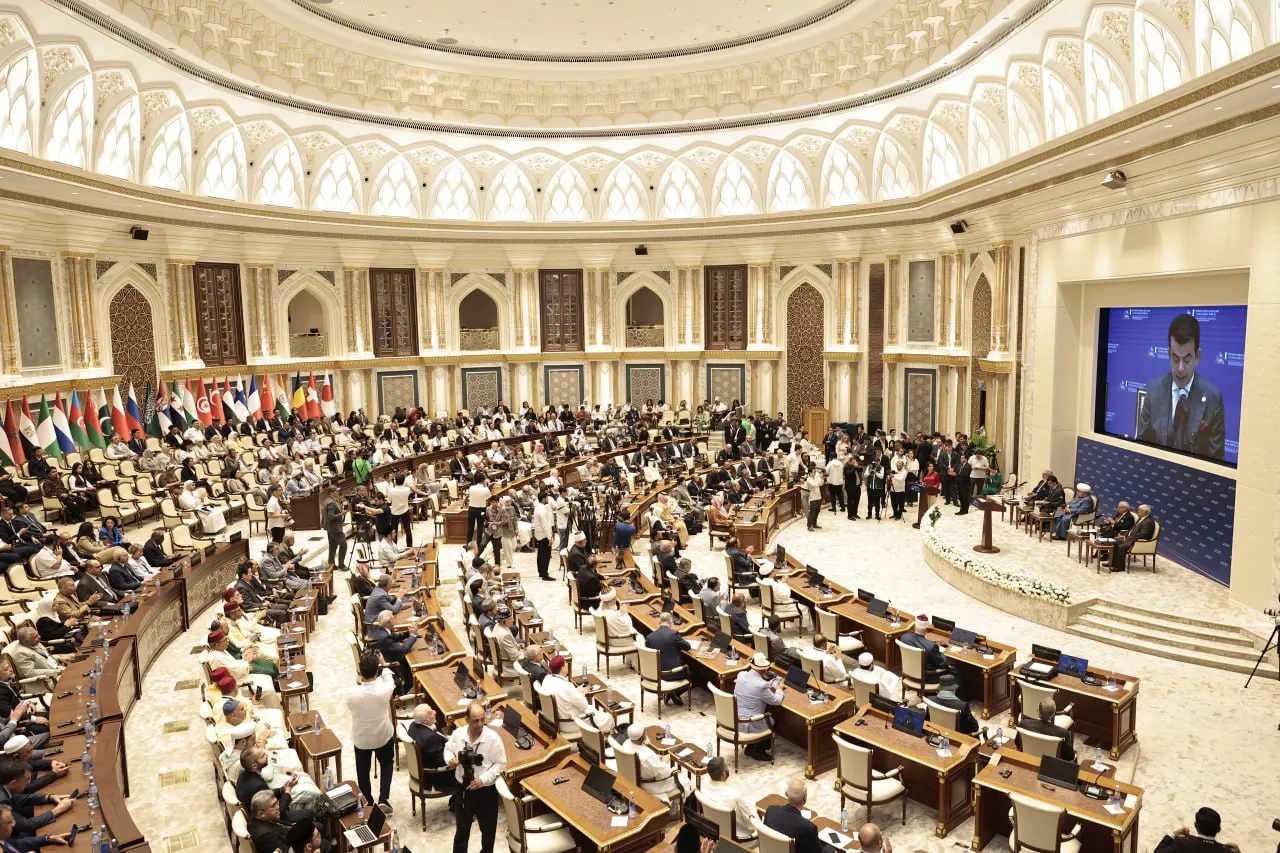
The Declaration specifically recognized the historic initiative put forward by the President of the Republic of Uzbekistan, Shavkat Mirziyoyev, at the 72nd session of the United Nations General Assembly in 2017, which aimed to restore, scientifically study, and widely promote the humanitarian heritage of Islamic civilization. It was also noted that the establishment of the Center for Islamic Civilization in Uzbekistan and the holding of the 1st International Forum on Islamic Civilization have initiated a new stage of international cooperation in this field.
Forum participants expressed their commitment to the principles of peace, tolerance, enlightenment, and intercultural and interreligious dialogue, once again acknowledging the immense contribution of Islamic civilization to the development of world science, education, art, architecture, and spiritual thought. At the same time, the need to strengthen scientific and educational approaches against ignorance, extremism, xenophobia, Islamophobia, and misconceptions about Islamic heritage was emphasized.
As a core part of the Declaration, ten global initiatives aimed at studying, preserving, and popularizing the heritage of Islamic civilization were proposed. Among them are the establishment of a World Alliance of Islamic Civilization based at the Center for Islamic Civilization in Uzbekistan, the creation of a World Digital Registry of Islamic Civilization Heritage, the implementation of the "Islamic Civilization — Wealth of All Humanity" international program, the establishment of an International Islamic Civilization Prize, the creation of an International Foundation for Islamic Civilization Research, and the development of a global digital library of Islamic civilization.
The Declaration also reflects proposals to prepare an international encyclopedia of Islamic civilization, establish a system for annual international reports on the status of heritage sites, organize an international youth forum on Islamic civilization, and form an international union of museums of Islamic culture, art, and civilization.
In accordance with the document, the International Council of the Forum, elected during the event, will continue its activities as a permanent coordinating body. The Council is tasked with consolidating the initiatives and proposals put forward during the forum, developing an international roadmap for joint actions until 2030 based on them, and forming mechanisms for their implementation.
Forum participants called on states, international organizations, scientific institutions, universities, museums, libraries, and public organizations to unite their efforts in realizing these initiatives. As emphasized, the Declaration serves as an important international programmatic document that will contribute to preserving, scientifically studying, and passing on the rich heritage of Islamic civilization to future generations as the common cultural and intellectual wealth of humanity.