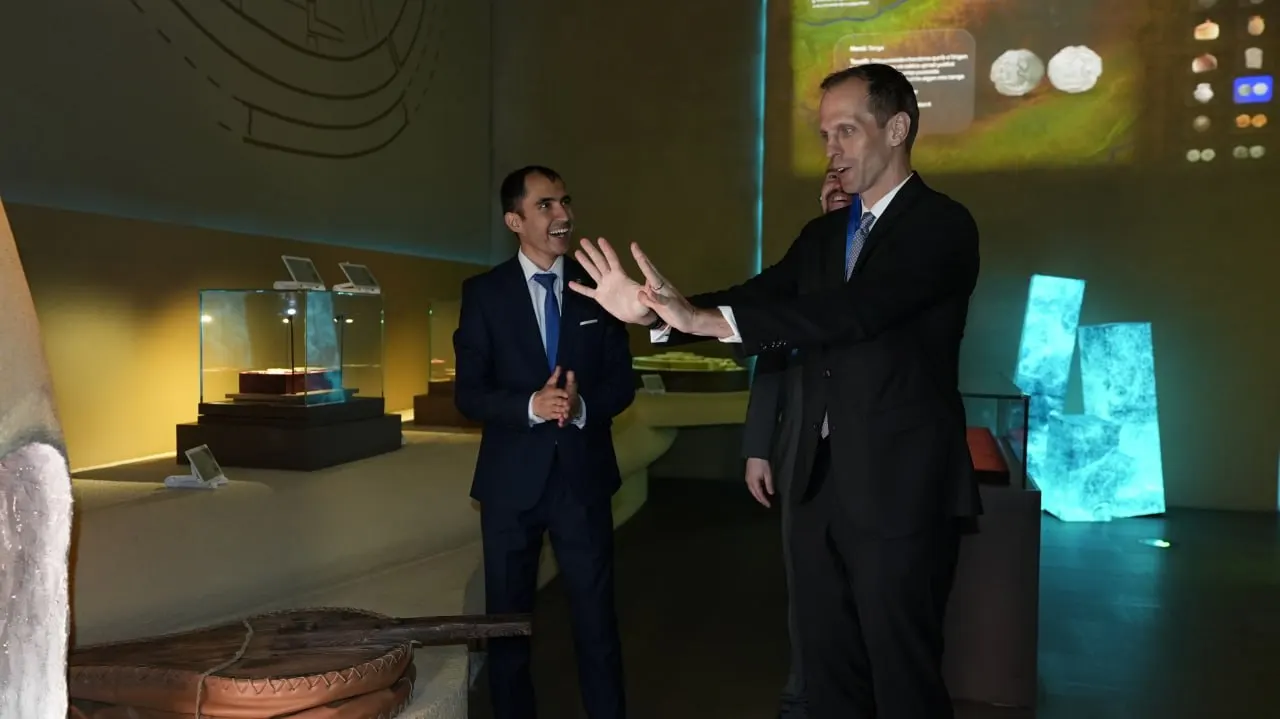
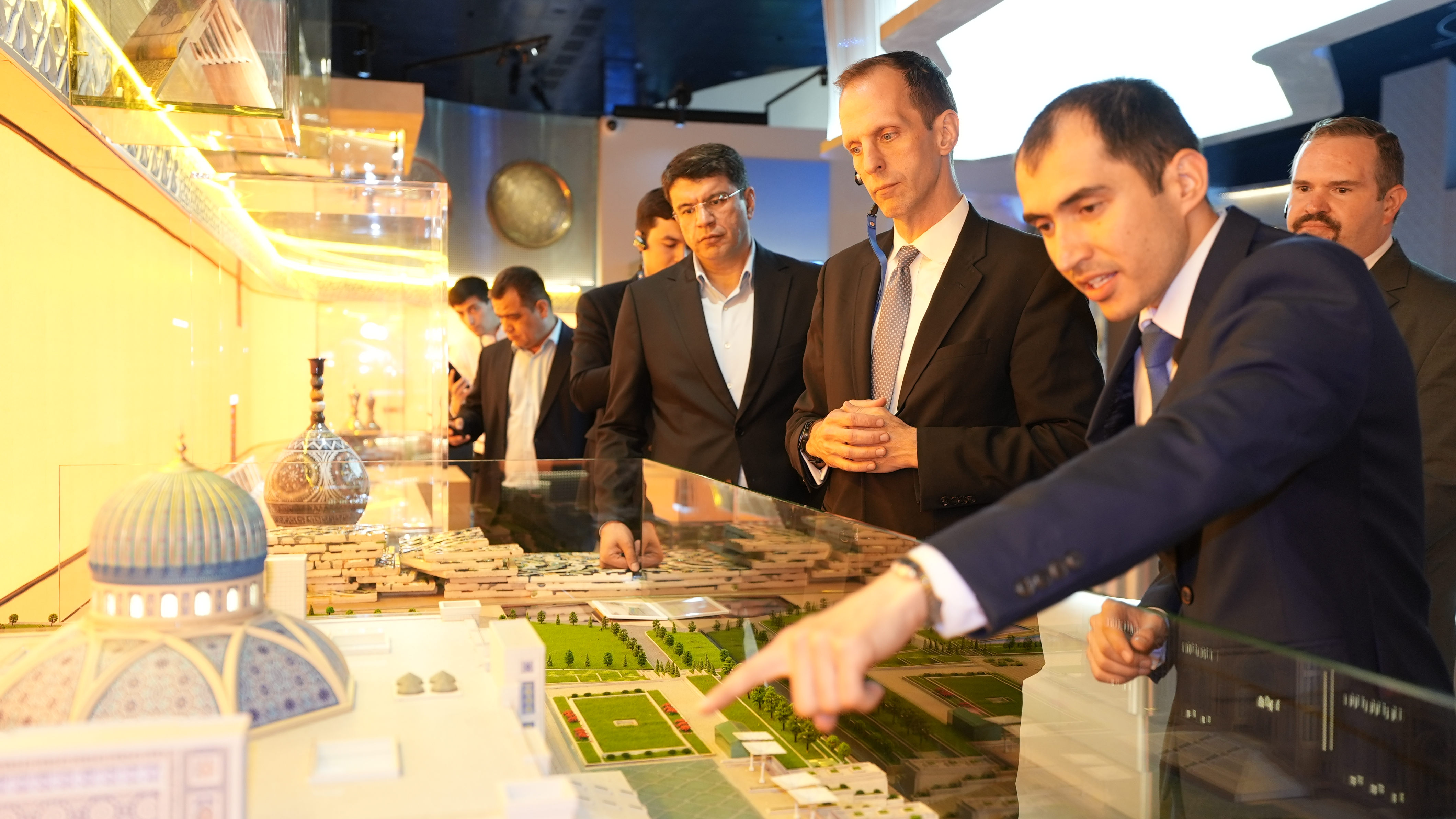
The Center of Islamic Civilization in Uzbekistan has welcomed another prestigious international delegation. A delegation led by Mark Tervakoski, Director of the Europe and Asia Program Office at the U.S. Department of State's Bureau of International Narcotics and Law Enforcement Affairs (INL), thoroughly familiarized himself with the Center's expositions.
During the visit, the guests highly praised the Center's architecture, the consistency of the expositions, and presentations organized on the basis of modern technologies. They began their tour traditionally with the "Gallery of Great Figures," where they familiarized themselves with the images of scholars of the First and Second Renaissance periods created through 110 different colored micro-mosaics. These works of art left a great impression on the guests, not only aesthetically but also historically.
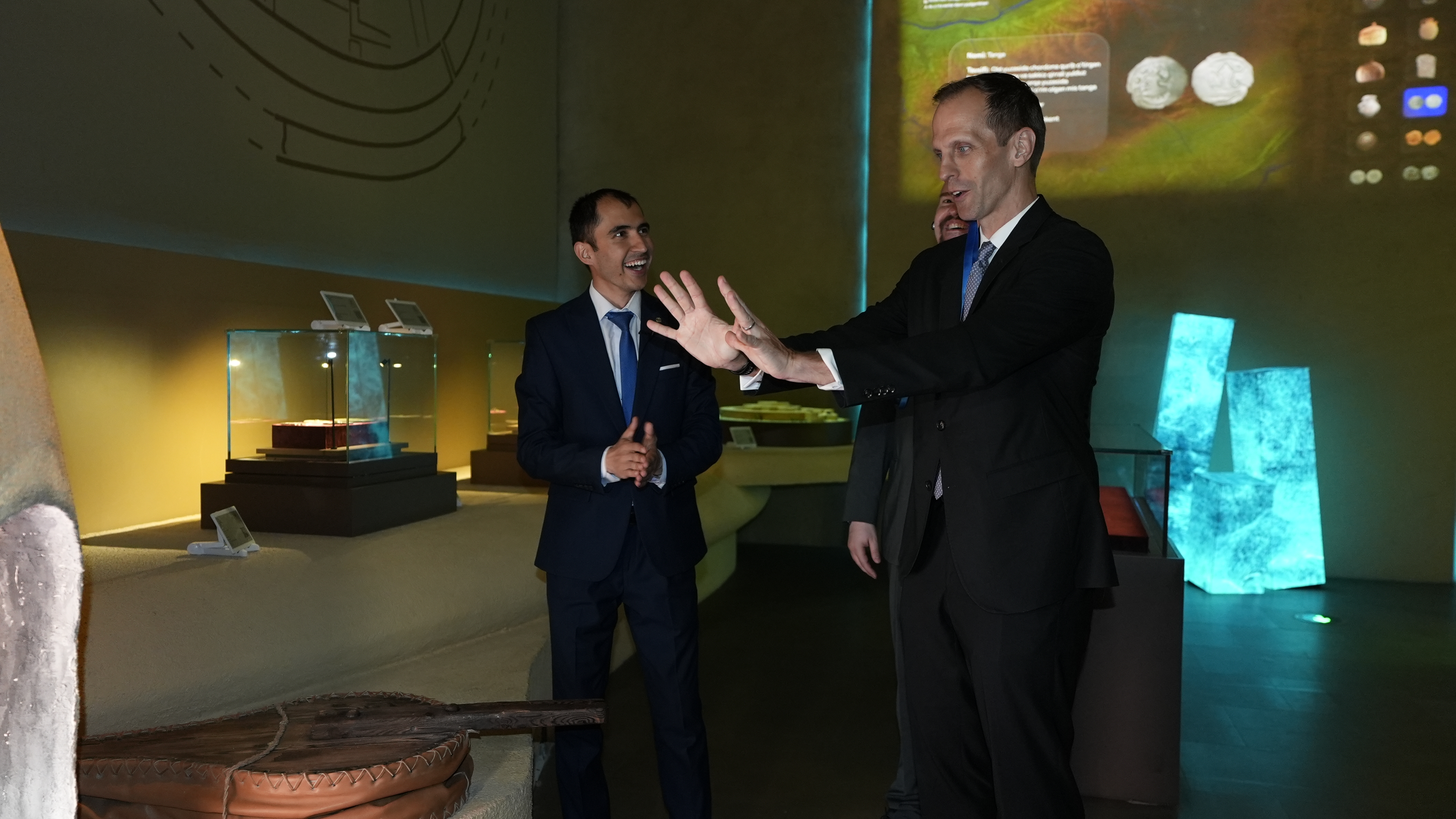
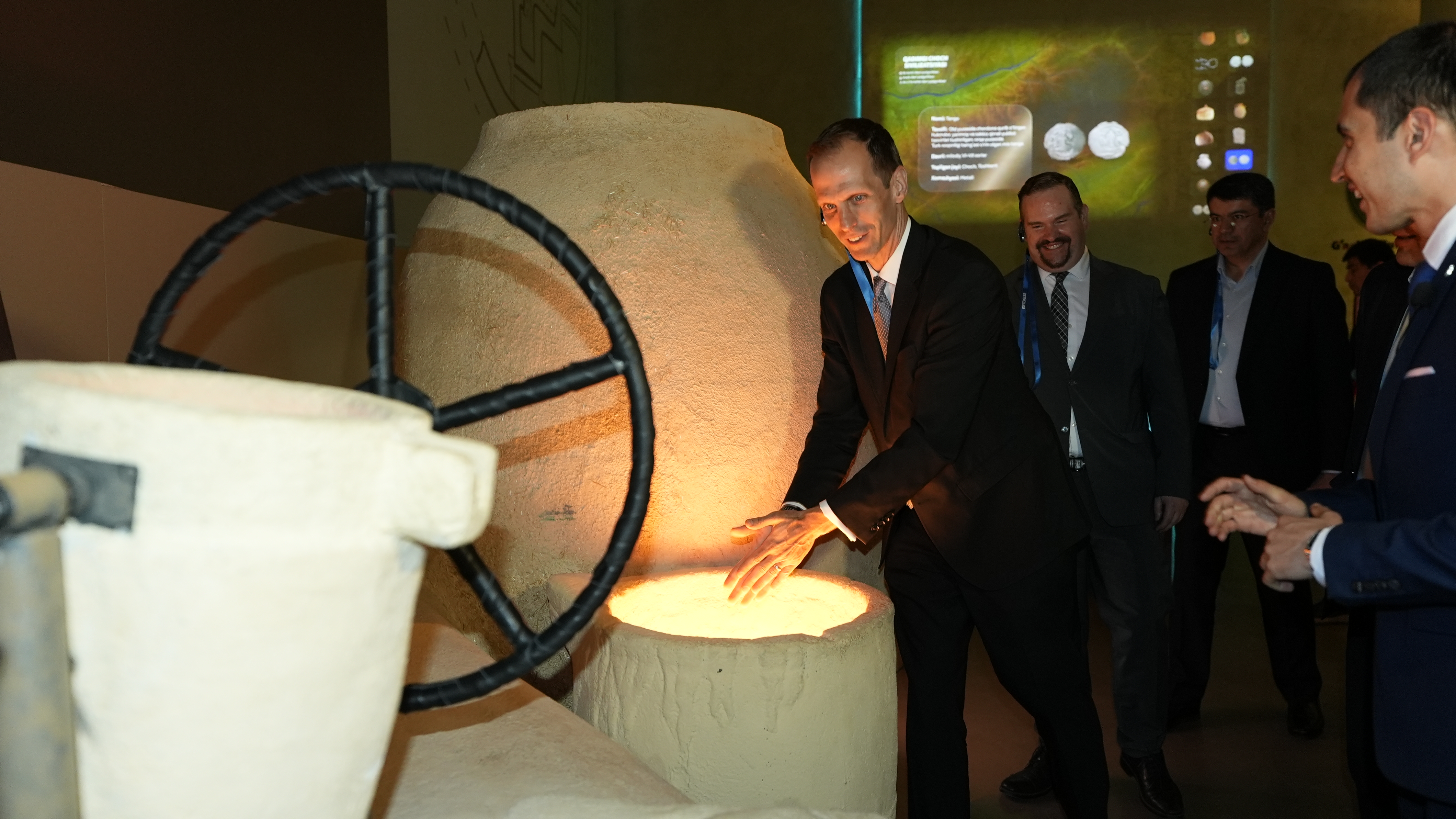
These works of art left a great impression on the guests, not only aesthetically but also historically. In the pre-Islamic exposition, information about ancient civilizations, early statehood, and trade relations was in the spotlight of the delegation. In particular, it was emphasized that archaeological finds, samples of early monetary circulation, and materials related to the Great Silk Road provided a deep understanding of historical processes.
The vivid depiction of past landscapes through interactive solutions in the exposition aroused great interest among the guests. In the First Renaissance section, parts dedicated to the development of science and enlightenment stood out in particular. It was noted that through rare manuscripts, architectural solutions, and samples of cultural heritage in this section, Central Asia's contribution to world civilization is clearly demonstrated.
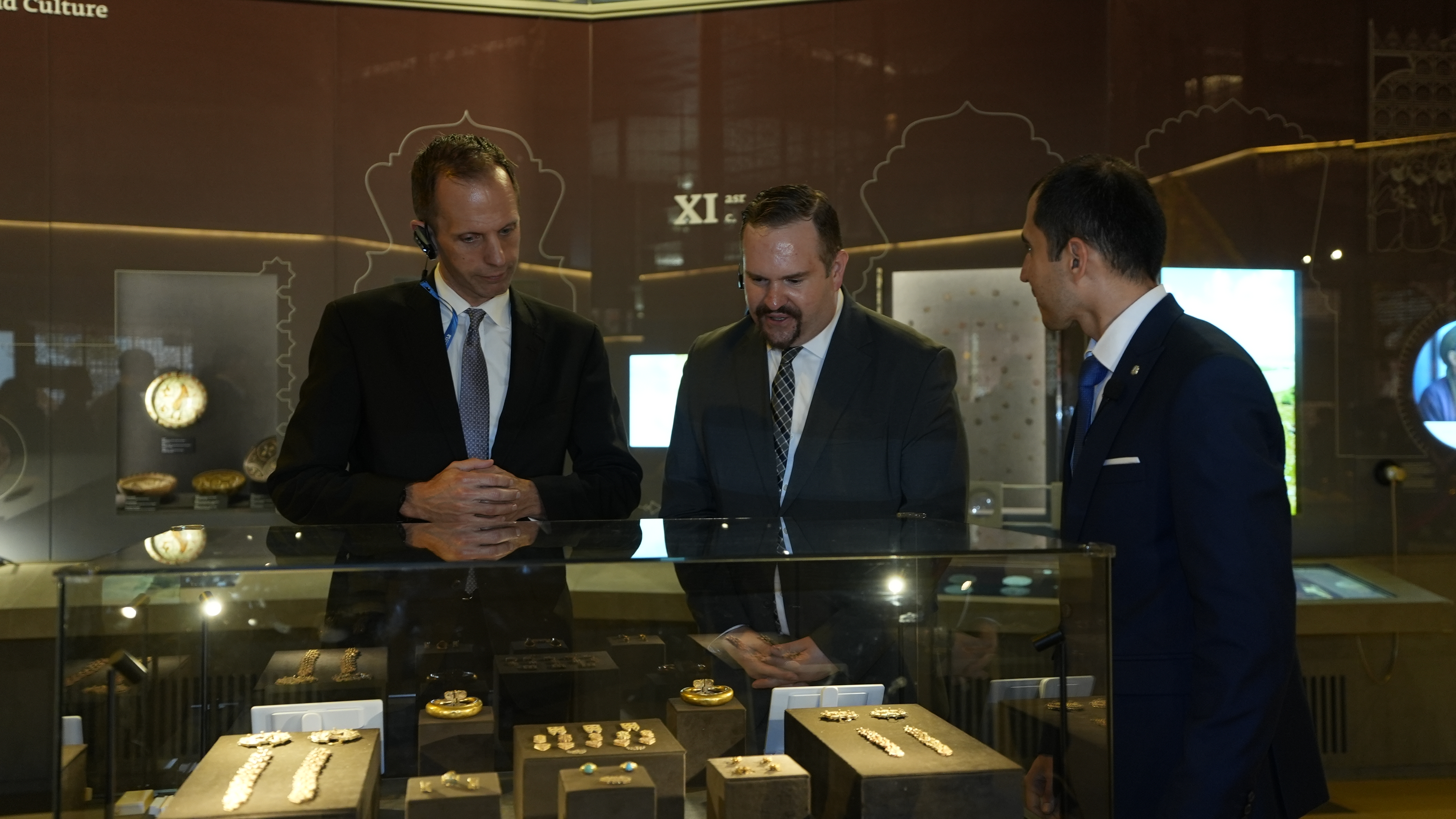
In the Second Renaissance section, the extensive coverage of statehood, diplomacy, and the development of science during the era of Amir Timur and the Timurids aroused great interest in the delegation. The opportunity to feel the spirit of that era through the palace library environment, historical sources, and interactive presentations was highly appreciated.
Mark Tervakoski, Director of the Europe and Asia Program Office at the U.S. Department of State's Bureau of International Narcotics and Law Enforcement Affairs (INL):
“I was very deeply impressed by the expositions at the Center of Islamic Civilization. In particular, the section related to the historical Quran displayed in the huge hall left me deeply amazed. As someone interested in history and archaeology, while walking through the entire complex, I once again felt how rich and deep the history of Uzbekistan and its people is. I think that the inclusion of the center in the Guinness World Records will further enhance Uzbekistan's international prestige. Through this, the world public will learn more about the cultural and historical heritage gathered here, and interest in the country will increase even further. I believe that cultural cooperation between the US and Uzbekistan will develop even more in the future. Such centers serve as a very important platform for dialogue and exchange of experience between the two peoples. I also particularly acknowledge the initiative of Shavkat Mirziyoyev in the establishment of the center. This center clearly demonstrates that such large and meaningful projects can be implemented through a clear goal and strategic approach. It is difficult to single out any particular exhibit among the artifacts. However, the cloak inscribed with Quranic verses dating back to the era of Aurangzeb left a special impression on me. It amazed me as a work that is not only rare but also has deep historical meaning.”
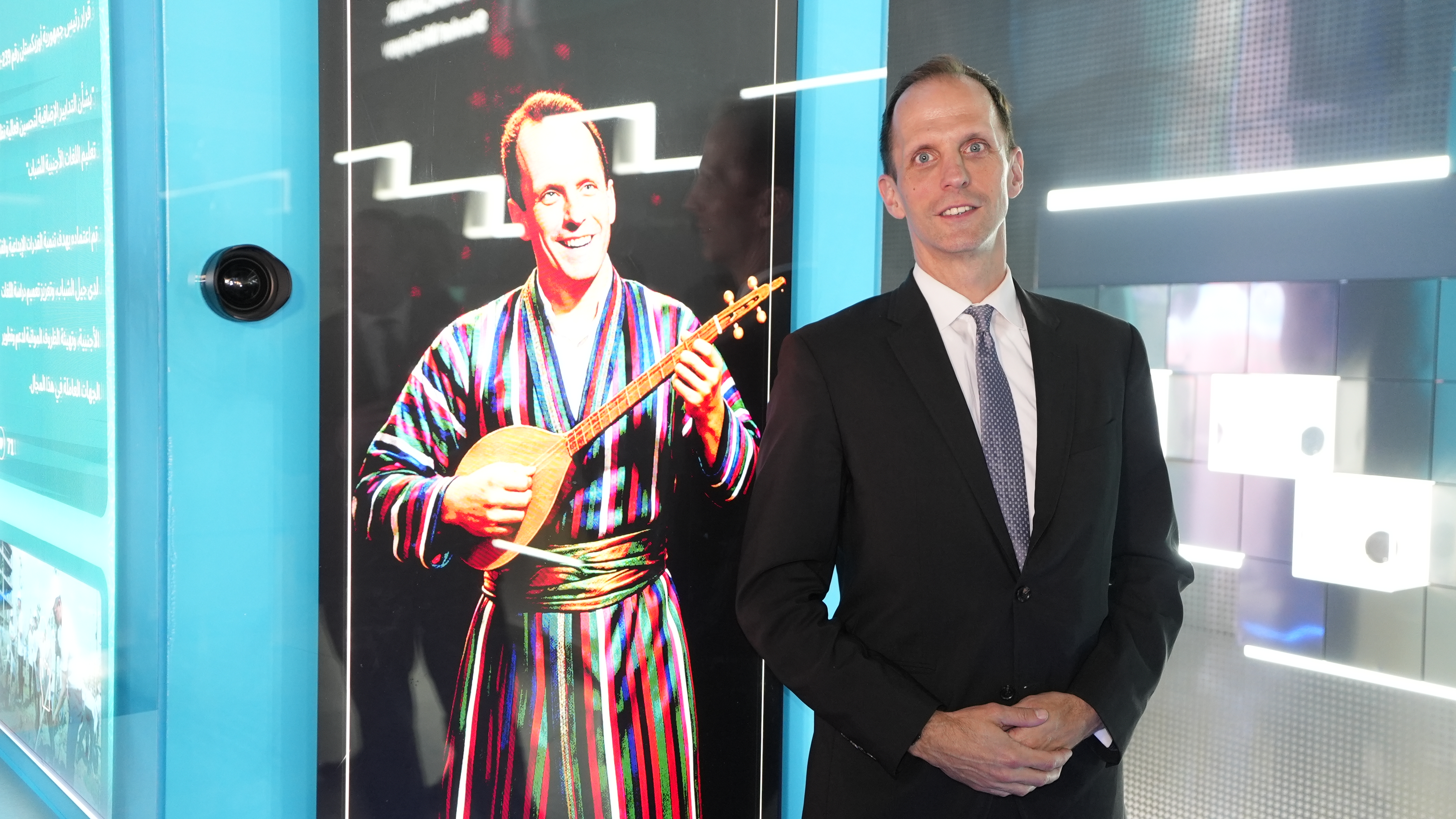
In the section "New Uzbekistan - The Foundation of a New Renaissance," information was presented on reforms being implemented in the country and initiatives aimed at developing a constitutional state and civil society. The members of the delegation particularly praised Uzbekistan's modern path of development and its open policy towards international cooperation through the materials in this section.
At the end of the visit, the guests visited the heart of the Center — the Hall of the Holy Quran. Here, the rare 7th-century Uthman Mushaf, the Quran copies located around it, and the modern mapping-hologram display left a deep emotional impression on the delegation.
The architecture of the hall, its artistic solutions, and the atmosphere of respect for the sacred heritage were specifically noted. During the visit, the members of the delegation evaluated the Center as an advanced model for preserving historical heritage and conveying it to the public in a modern format, emphasizing its important role in strengthening international cooperation and cultural dialogue.
At the end of the tour, Mark Tervakoski left his notes in the Center's guestbook, expressing his deep impressions of this place.