The unique flavor of every destination reflects its history, culture, and lifestyle. According to a recently published travel trends report, 82 percent of survey participants emphasized that direct participation in local life helps to understand that nation's culture more deeply.
In Turkey, a cup of Turkish coffee embodies all of these experiences. It is a part of the national culinary heritage, an expression of sincere conversation, and a tradition of hospitality shaped over centuries.
With its unique aroma, smooth foam, and traditional preparation method, Turkish coffee is an integral part of the country's culture. Its rich heritage was recognized internationally in 2013 when “Turkish coffee culture and tradition” was inscribed on the UNESCO Representative List of the Intangible Cultural Heritage of Humanity.
Celebrated on December 5, World Turkish Coffee Day is a fitting occasion to more deeply understand this tradition that has lived on in Turkey for centuries.
Turkish Coffee: A Centuries-Old Heritage
Although Turkey is famous for its tea culture, Turkish coffee also holds a special place in daily life. Having entered Istanbul from Yemen in the 16th century, coffee soon prompted the emergence of the world's first coffeehouses. People would gather in these venues to exchange ideas, chat, and spend time over a cup of coffee. European diplomats and merchants contributed to the spread of the coffee tradition from the Ottoman capital to all of Europe.
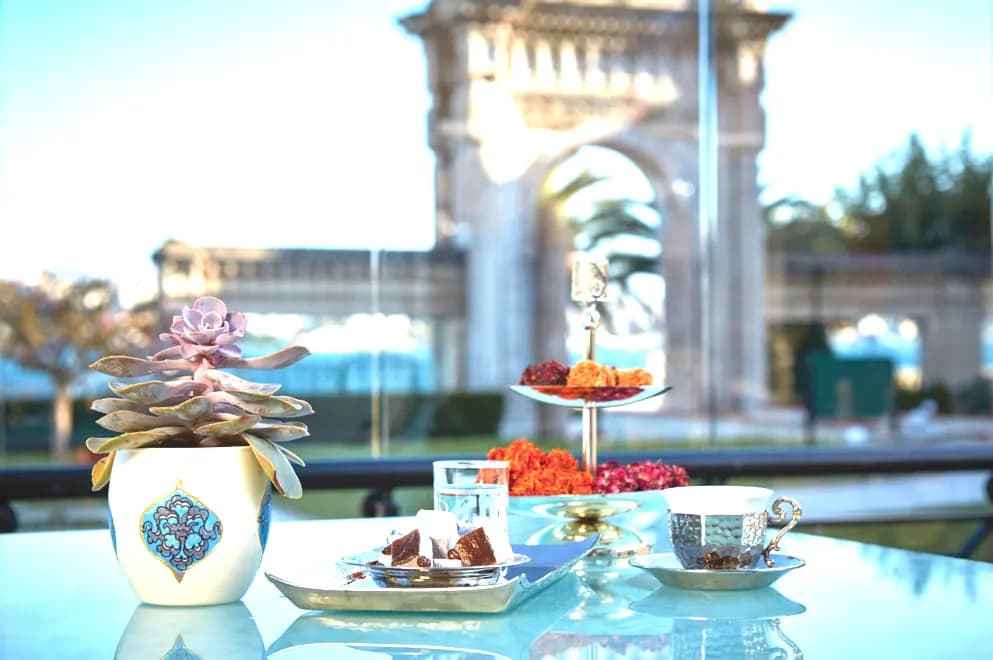
Turkish coffee stands out with its unique aroma and smooth, velvety foam. What is the secret that made it famous? The secret lies in its preparation method. Coffee beans ground into a fine powder are heated slowly with water over low heat in a small pot called a "cezve". This is how the thick foam characteristic of the coffee is formed. Coffee is prepared without sugar or with added sugar according to taste, and is served in small cups called "finjan", often accompanied by Turkish delight.
From daily conversations to engagement ceremonies, Turkish coffee brings people together around the same circle. It continues to maintain its importance as a sincere expression of hospitality. In every region of Turkey, coffee culture has its own unique taste and appearance.
Turkish Coffee Traditions Across Turkey
Exploring coffee culture across Turkey can begin in Istanbul. Neighborhoods such as Sultanahmet, Sirkeci, and Eminonu in the city's Historic Peninsula, as well as Karakoy, Galata, and Kadikoy, feature many coffeehouses with a unique atmosphere. The fragrant aroma of freshly ground coffee beans wafts through these venues. In some coffeehouses, coffee is prepared over heated sand or embers. Such a method gives the drink a fuller and richer taste.
Coffee culture is well-developed in the bustling areas of the capital Ankara, such as Tunali Hilmi Street and Cankaya. In the Alsancak and Urla regions of Izmir, Turkish coffee is prepared in the traditional way. In Alacati, coffee infused with mastic gum stands out with its unique local flavor.
Gaziantep in the southeast is known for its menengiç coffee. Naturally caffeine-free, this drink is made from the roasted fruits of the wild pistachio tree – Pistacia terebinthus. In Sanliurfa and Mardin, bitter mirra coffee prepared from twice-roasted beans is drunk. Meanwhile, the caravanserai coffee specific to Adiyaman is made by adding chocolate, cream, salep, carob, menengiç, and mastic gum.
Dibek coffee, found in various regions of Turkey, is prepared by grinding roasted beans in a stone mortar rather than a regular mill. The Turkish Coffee Museum in Safranbolu provides an opportunity to get acquainted with the unique aspects of the country's coffee culture. Famous for its Ottoman-era houses, this city is included in the UNESCO World Heritage List and the Cittaslow network.