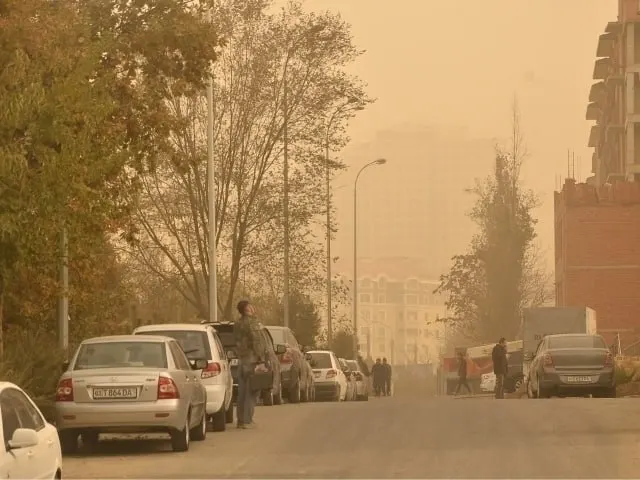
A national program to combat dust and sandstorms in Uzbekistan for 2024–2030 has been adopted. Within the framework of the program, it is planned to reduce the intensity of severe dust and sandstorms by 50 percent by 2028. This was reported by the National Committee for Ecology and Climate Change.
According to the committee's data, as a result of the drying up of the Aral Sea, the opportunity to use nearly 3 million hectares of land has been lost. More than 56 percent of this territory is subject to severe wind erosion. The annual economic damage caused by land degradation and desertification is estimated at 830 million dollars.
According to studies conducted in cooperation with the World Bank, the share of dust coming from outside the city through the wind reaches up to 36 percent in the annual average concentration of PM2.5 fine particles in Tashkent. During the dry summer months, this indicator exceeds 50 percent.
Within the framework of the program, work is being carried out to establish a single network consisting of 347 automated stations to monitor atmospheric air quality, develop an early warning system, restore degraded lands, and create protective green zones.
Uzbekistan also proposed measures for regional monitoring and forecasting of dust and sandstorms, assessing dust sources via satellites, sustainably managing pastures and water resources, and protecting public health.